
Editor’s Note:
When BA Capital first invested in POP MART in late 2017, the company was still widely viewed as a niche designer toy retailer centered around blind boxes.
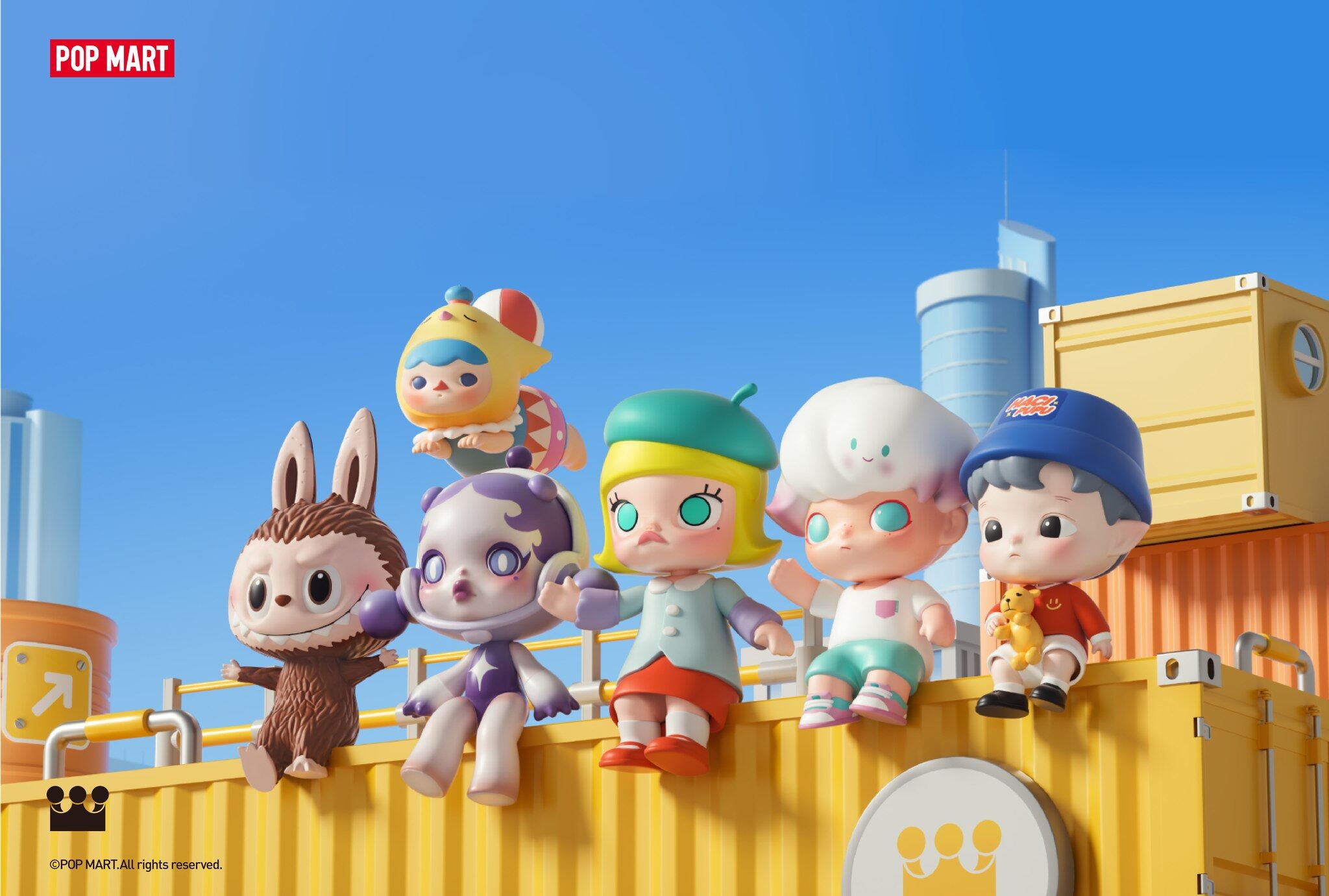
What we saw instead was the early emergence of a new kind of IP platform — one built not around long-form content franchises, but around companionship, emotional engagement, and repeat interaction.
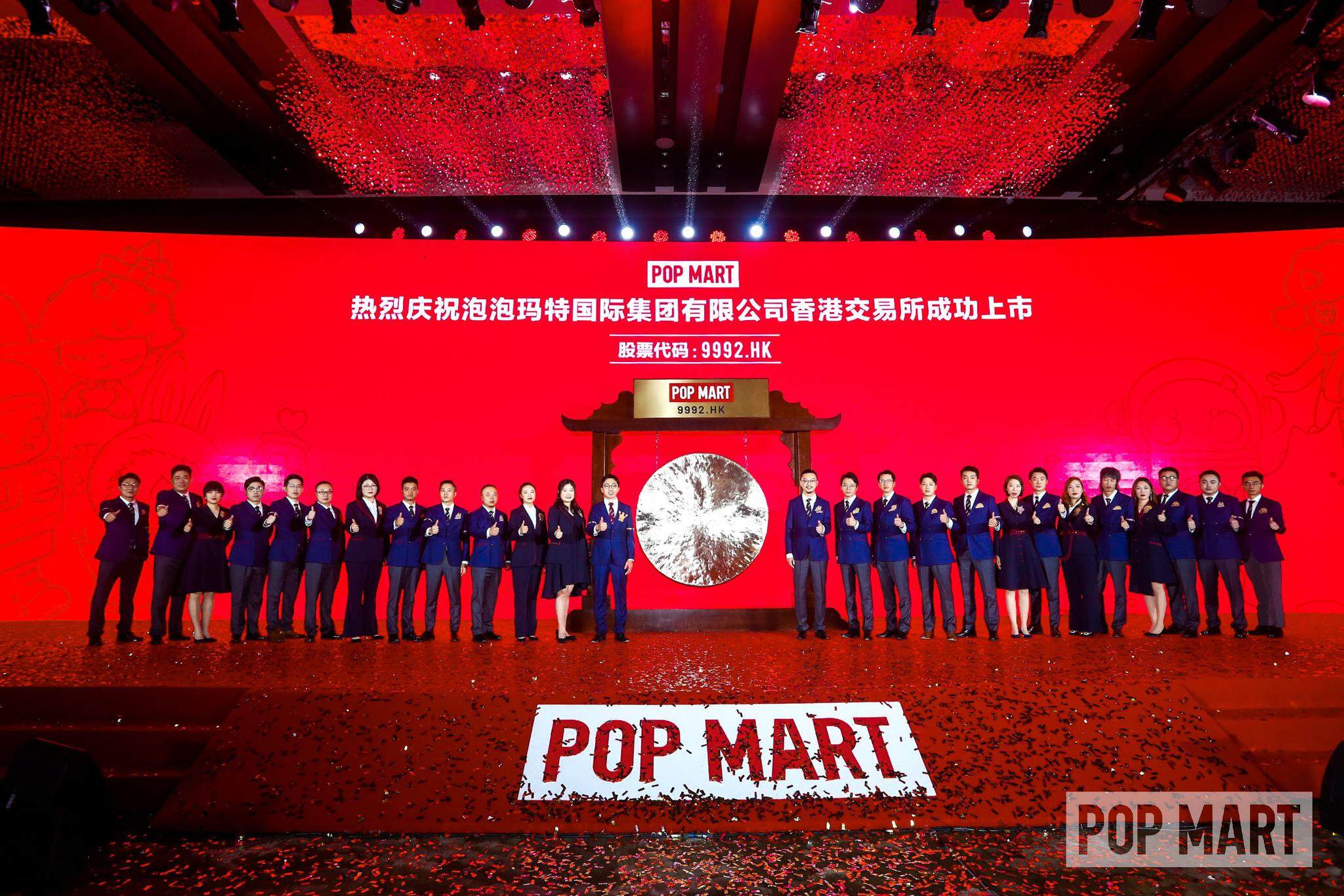
On December 11, 2020, POP MART was listed on the Hong Kong Stock Exchange (9992.HK).
BA Capital invested in POP MART across four rounds between 2017 and 2020.
The following section revisits our thinking behind the investment in POP MART.
For us, our investment in POP MART was never simply about a fast-growing toy category. It reflected a broader belief that consumer companies increasingly fall into two distinct models:
- Efficiency-driven businesses, where competitive advantage comes from scale, supply chain efficiency, and operational execution;
- Differentiation-driven businesses, where long-term value is built through product experience, emotional connection, aesthetics, culture, and brand identity.
POP MART belonged firmly to the latter.
What We Saw Early Was an Emerging IP Platform
BA Capital Managing Partner David He first met POP MART founder Wang Ning in Beijing in 2016.
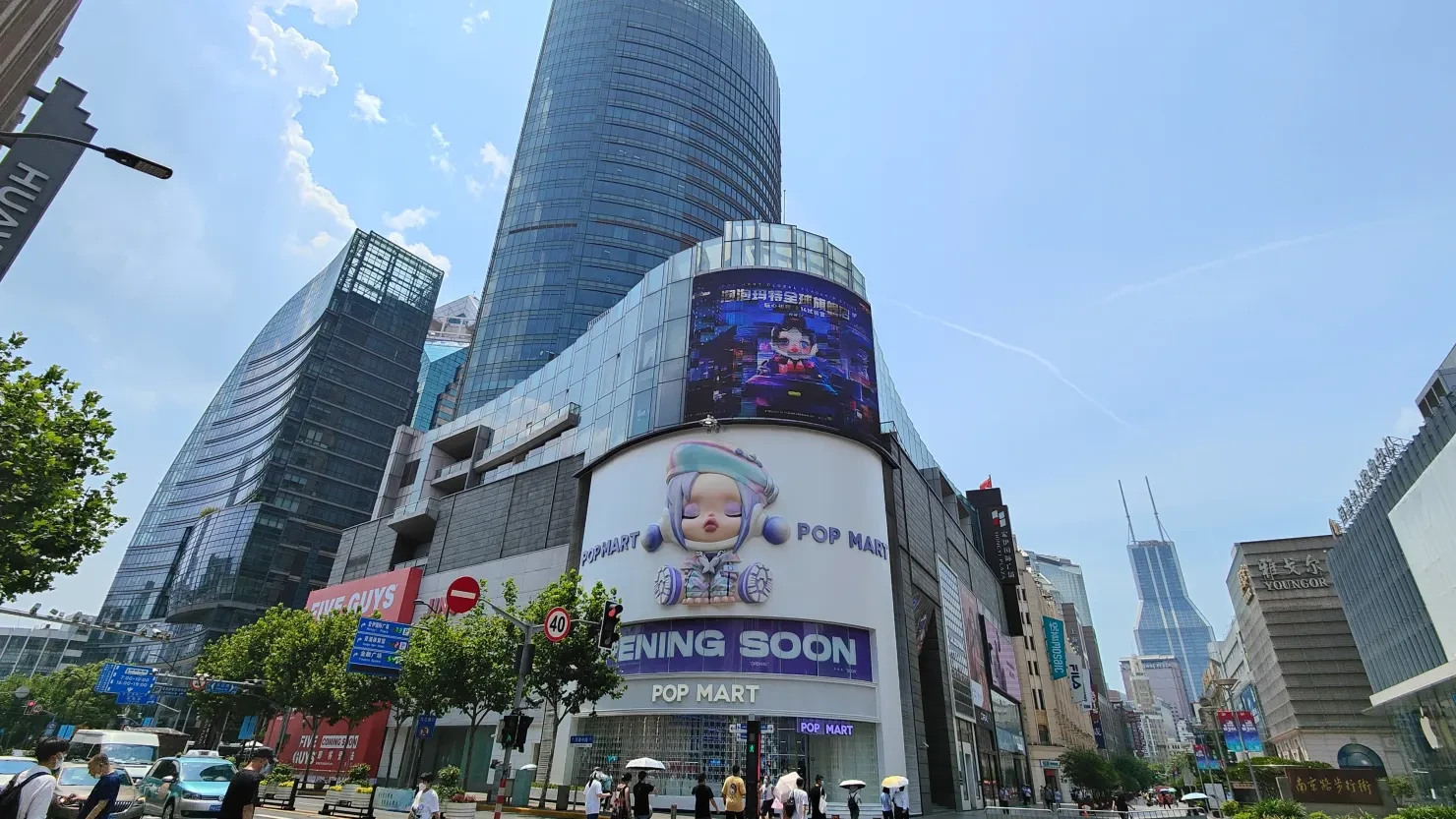
Before the meeting, David visited one of the company’s stores at Financial Street Shopping Center. The mall had not yet opened for the day, but consumers were already lining up outside POP MART — the only store in the Mall with a queue that morning.
At the time, POP MART still looked more like a contemporary variety store, selling everything from stationery and toys to household goods and small accessories.
But Wang Ning was already thinking beyond traditional retail logic.
He spoke about building an IP platform — not simply distributing products, but creating a system capable of connecting artists, characters, products, and consumers over the long term.
Several of his views were highly unconventional at the time:
- IP did not necessarily need long-form content to emerge;
- Character affinity itself could become the foundation of consumer attachment;
- As media consumption became increasingly fragmented, “light-content IP” would become more important;
- The company’s long-term advantage would come from building infrastructure around IP operations rather than from any single product category.
Today, many of these ideas appear intuitive. In 2016, they were not.
As David He later recalled:
Wang Ning understood the decisive factors very early on and began building toward them from the beginning.
One important turning point came in 2015, when POP MART noticed that Sonny Angel — a product occupying only a single shelf in-store — was generating unusually high repeat purchases and contributing nearly 30% of total store sales.

Looking back, this was the moment POP MART began to recognize the long-term importance of IP within its retail business.
Blind Boxes Were Only the Format—Not the Business Itself
POP MART has often been misunderstood externally as a “blind box company.”
We viewed the blind box format very differently.
The blind box was simply the format through which consumers engaged with the product. The real asset was the ecosystem forming around artist discovery, IP incubation, retail operations, community engagement, and long-term consumer relationships.
Beginning in 2017, POP MART started building these capabilities systematically. The company expanded its artist network, developed proprietary IP, scaled online and offline retail channels, strengthened its community-building infrastructure, and continuously increased consumer touchpoints.
Over time, this evolved into a highly integrated IP operating platform.
This was the core reason BA Capital consistently viewed POP MART not as a toy company, but as a vertically integrated IP platform.
The key challenge in the IP industry has never been manufacturing products. It is sustaining consumer attention, emotional attachment, and cultural relevance over time.
That is why platform dynamics matter.
As more consumers gather within the ecosystem, the platform becomes increasingly attractive to artists and creators. As more compelling IP enters the ecosystem, consumer engagement deepens further.
This network effect gradually compounds into a significant competitive barrier.
As David He noted years ago:
Only an effective two-sided platform can create value for both consumers and creators. Once that system forms, it becomes extremely difficult to replicate.
The Rise of Differentiation-Driven Consumption
POP MART’s emergence also reflected a broader shift in Chinese consumer behavior.
For many years, much of China’s consumer market was driven by functional and efficiency-oriented demand: better pricing, higher utility, and stronger value-for-money propositions.
But as material conditions improved and younger generations entered adulthood with greater purchasing power, consumers also began allocating more spending toward products centered on experience, identity, and emotional engagement.
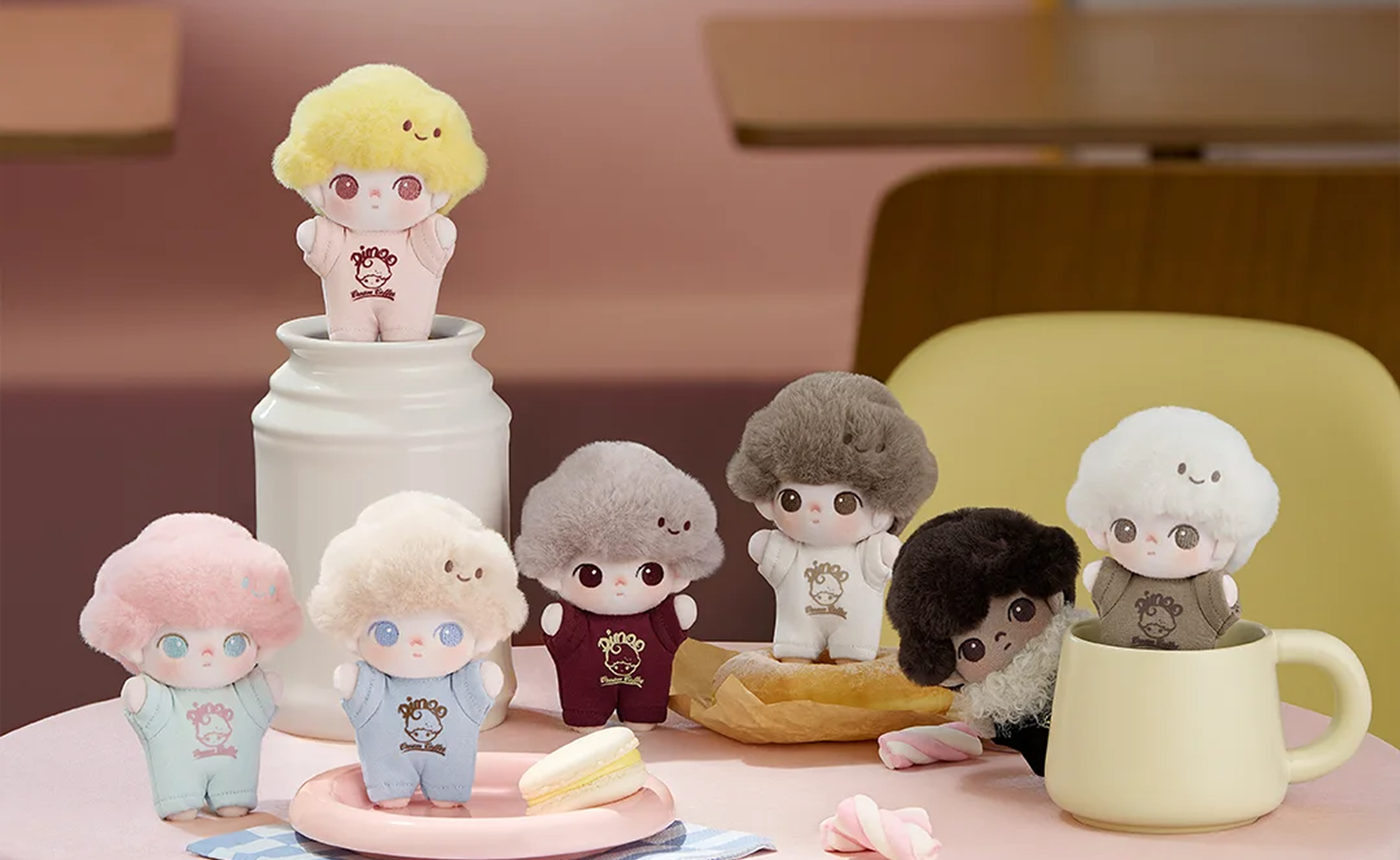
The appeal of artist toys was rooted less in functional utility than in emotional companionship, character attachment, aesthetic preference, collectibility, and identity expression.
In many ways, POP MART occupied a new category situated between consumer product, collectible, and cultural symbol—what we would describe as differentiation-driven consumption.
Importantly, its core audience was never limited to teenagers or students. A significant portion of consumers were adult women with meaningful discretionary income, many of whom developed long-term collecting habits around specific IPs.
This ongoing relationship between consumers and IP became one of the company’s most important drivers of repeat engagement and loyalty.
New Media Eras Often Give Rise to New Cultural Platforms
To better understand how category-defining cultural platforms emerge, BA Capital conducted extensive research into global consumer and IP companies including Disney, LEGO, and Bandai Namco.
Bandai emerged during Japan’s postwar retail expansion, when department stores functioned as the primary distribution infrastructure for consumer products. In that environment, control over retail distribution effectively translated into control over consumer reach and attention.
This position enabled Bandai to gradually extend beyond product distribution into animation, licensing, and broader IP operations, ultimately evolving into a platform embedded across multiple layers of the entertainment and consumer ecosystem.
Disney followed a different path.
Disney’s enduring advantage has never been anchored in any single character IP. Instead, it has historically functioned as a vertically integrated cultural distribution system—spanning content creation, media networks, consumer merchandise, and immersive physical experiences.
For decades, this system allowed Disney to effectively capture and monetize cultural “traffic” generated by the global export of American entertainment. In that context, flagship IP such as Mickey Mouse mattered not only as standalone cultural assets, but also as anchors within a broader infrastructure for aggregating and monetizing attention.
Viewed from this perspective, Disney’s most meaningful competitive pressure today does not come from rival IP owners. Rather, it comes from a structural shift in how cultural attention is created and distributed. The rise of platform-based content ecosystems—most notably Netflix—represents a different kind of competitor: not merely an IP producer, but a global attention-distribution engine.
This shift reframes the nature of competition from “who owns the best characters” to “who controls the most efficient cultural distribution network.” It is precisely this redefinition that made Disney’s move into Disney+ not optional but structurally necessary. The streaming strategy was not merely an expansion into digital content, but an attempt to re-anchor Disney within the new infrastructure layer of cultural distribution.
These studies reinforced an important insight for us:
POP MART was emerging within a mobile internet and social media environment fundamentally different from earlier companies.
Its growth relied less on centralized media distribution and more on:
- Social sharing
- Community participation
- User-generated content
- Viral interaction
- Offline experiential retail
Together, online platforms and physical stores formed a new type of consumer connection network.
In late 2018, BA Capital discussed POP MART’s long-term strategy extensively with Wang Ning. One conclusion from those conversations was particularly important:
The long-term structure of the IP and licensed consumer products market will ultimately be shaped by two forces: the types of IP consumers demand, and the types of products the market converges toward. However, the behavior of category-defining companies also plays a decisive role in shaping this end state.
Across developed markets such as the United States and Japan, we observe materially different evolutionary paths—ranging from ecosystems dominated by a few large IP franchises to more fragmented systems where “light IP” and frequent content iteration play a greater role. In China, given the early stage of category formation and the rapid evolution of consumer preferences, the eventual structure remains uncertain.
What is clearer, however, is the mismatch between the speed of consumer base expansion and the pace at which high-quality IP content can be created. In such an environment, leading companies are incentivized to prioritize scale and reach over early optimization of IP depth. The primary objective in the near term is therefore to capture incremental market share, maximize consumer touchpoints, and deepen intensity.
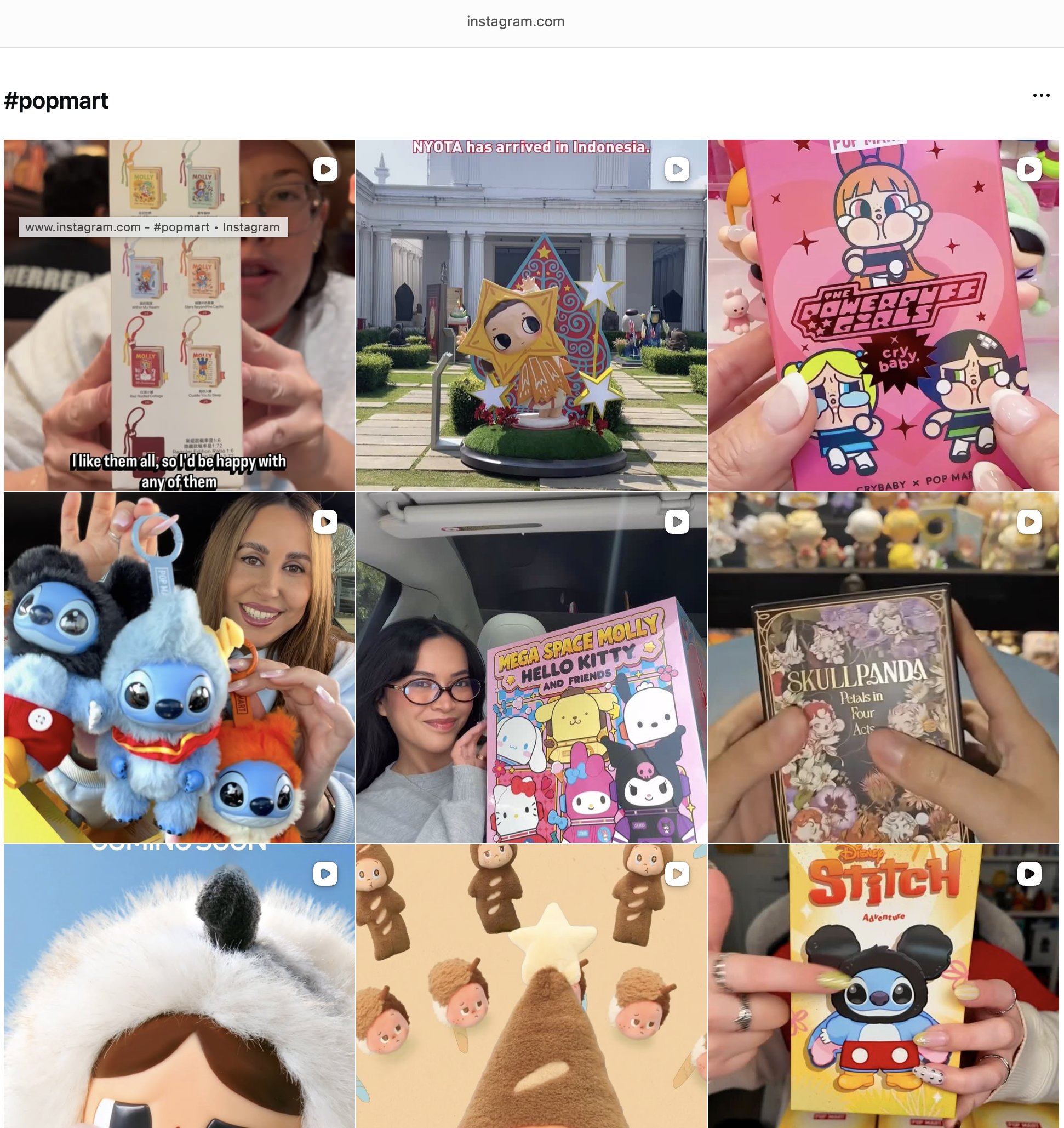
In this phase of expansion, “traffic” becomes the key constraint—not only in its online form, but also in physical retail environments. Online channels—particularly content- and community-driven platforms such as Xiaohongshu, Douyin, WeChat, and Weibo—function as distributed discovery and reinforcement systems for IP exposure. Accordingly, companies can build a multi-layered content and IP visibility matrix across these platforms.
On the offline side, physical stores should evolve beyond transactional retail functions and be designed as experiential and socially embedded spaces. This implies deliberate choices around store scale, product breadth, and the integration of experiential and interactive elements that encourage social sharing and repeat visitation.
When the industry is still in a phase of net traffic expansion, the ability to build both online and offline “traffic destinations” can become a structural source of competitive advantage. Over time, these integrated touchpoints evolve into a persistent consumer connection network—one that is difficult to replicate once scale and behavioral habits are formed.
Each initiative reinforced a common objective: increasing the density and persistence of consumer engagement within the company’s IP system.
People, Culture, and the Consumer Connection System
Taken together, POP MART’s long-term resilience is rooted not in any single product or IP, but in a system built around people.
In early-stage investing, Black Ant Capital Managing Partner David He has summarized the firm’s investment philosophy:
“Three factors are essential for our investment decisions: outstanding founders, major innovations in business models, and high barriers embedded in the operating model. POP MART fits all three dimensions. Over the years, we have accompanied the company’s growth and witnessed Wang Ning and his team continuously realizing the original vision—evolving from a trend toy retailer into a platform connecting consumers on one side and IP designers on the other, ultimately becoming the only vertically integrated IP platform in China.”
This perspective provides a useful lens through which POP MART’s evolution can be understood.
Internally, the company is anchored in a deeply aligned team culture that consistently prioritizes long-term execution over short-term optimization. Externally, it extends into a global consumer base whose emotional needs are continuously translated into scalable commercial value.
Over time, this alignment between organizational culture and consumer demand has evolved into a repeatable operating system—one that converts IP creation into a continuously compounding engagement flywheel.
In practice, POP MART functions as a vertically integrated IP platform, linking IP creators and consumers across content, distribution, and commercialization. Its expansion across retail stores, digital channels, community engagement, and experiential formats reflects a consistent objective: increasing the density of consumer connection to its IP system.
In this sense, POP MART’s true moat is not derived from resource ownership or structural scarcity, but from its ability to continuously generate and compound consumer engagement through a tightly coupled people–culture–consumer feedback loop.