
Editor’s Note:
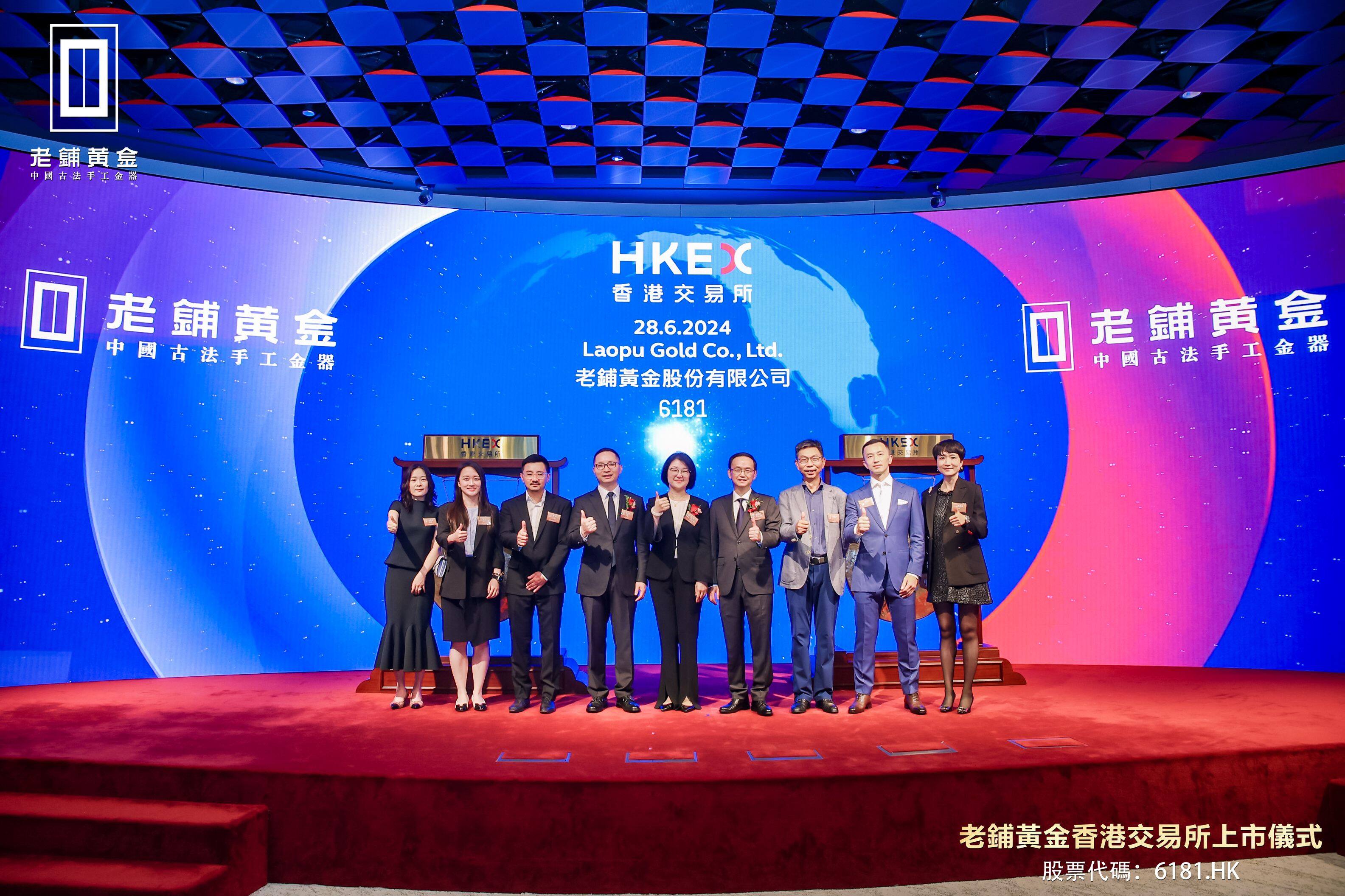
Looking back a decade from now, Laopu Gold’s IPO may well be seen as a defining moment in the evolution of Chinese brands.
As an emerging brand still in a strong growth phase, Laopu Gold has already demonstrated remarkable competitiveness through its industry-leading store productivity and profitability. More importantly, the company has built meaningful differentiation through its product innovation capabilities, growing consumer brand affinity, and disciplined operational execution. These strengths are what set Laopu Gold apart in China’s gold jewelry market.
The following content revisits the thinking behind our investment in Laopu Gold.
The brand sits at the intersection of several important consumer trends in China today: rising demand for experience-driven and self-expressive consumption, as well as a growing appreciation for traditional Chinese culture and aesthetics. Laopu Gold not only captures the ongoing premiumization of China’s gold market, but also demonstrates the potential for a Chinese high-end jewelry brand to compete on a global stage. As Chinese consumers continue to pursue higher-quality lifestyles alongside increasing cultural confidence, we believe the company has substantial long-term growth potential. More broadly, we see this as an encouraging signal for the future of Chinese brands.
— Michael Zhang, Managing Partner at BA Capital
These remarks were written in June 2024, shortly after Laopu Gold’s listing on the Hong Kong Stock Exchange. Seven months earlier, BA Capital led the company’s only pre-IPO institutional financing round, after being the sole investor in the market to submit a lead-investment term sheet.
BA Capital first met Laopu Gold founder Xu Gaoming in 2019, but the company did not open its first and only pre-IPO financing opportunity until 2023. At the time, Laopu Gold was still far from market consensus. Rather than viewing it as a traditional gold retailer, we focused on its long-term accumulation in product creativity, cultural expression, consumer mindshare, and premium retail validation.
Three years later, as Laopu Gold begins to attract global attention, we revisit the original investment thesis and share three perspectives on how BA Capital made its decision before the opportunity was widely recognized.
Great Products Drive Demand
When consumers talk about Laopu Gold, one word appears again and again: “beautiful.”
In our early consumer interviews, aesthetics consistently ranked among the most important purchase drivers. Consumers were not primarily buying for gold weight or investment value — they were buying because they found the products visually compelling and emotionally resonant.
This distinction matters. While Laopu Gold draws heavily from traditional Chinese culture, cultural references alone do not create consumer demand. What matters is the company’s ability to transform cultural heritage into products that feel relevant, desirable, and contemporary.
We have seen a similar shift across broader consumer trends in China. The rise of museum retail, heritage-inspired brands, and culture-driven consumption reflects not simply renewed interest in tradition, but a meaningful improvement in design quality and product experience. Consumers are increasingly willing to engage with culturally rooted products when they are executed with modern aesthetics and craftsmanship.
That is precisely what Laopu Gold has done. The company takes elements of traditional Chinese culture — symbols, motifs, craftsmanship traditions, and aesthetic philosophies — and reinterprets them through a modern product lens. The result is jewelry that feels culturally distinctive without appearing historical or nostalgic.
Over time, the company’s product development has evolved significantly: from collectible pieces inspired by historical artifacts, to wearable jewelry that balanced utility and aesthetics, and eventually to highly refined designs that integrate craftsmanship, storytelling, and contemporary taste. Behind that evolution is a long-term accumulation of design capability, craftsmanship innovation, and organizational discipline.
An Early Leader in Ancient Gold Craftsmanship
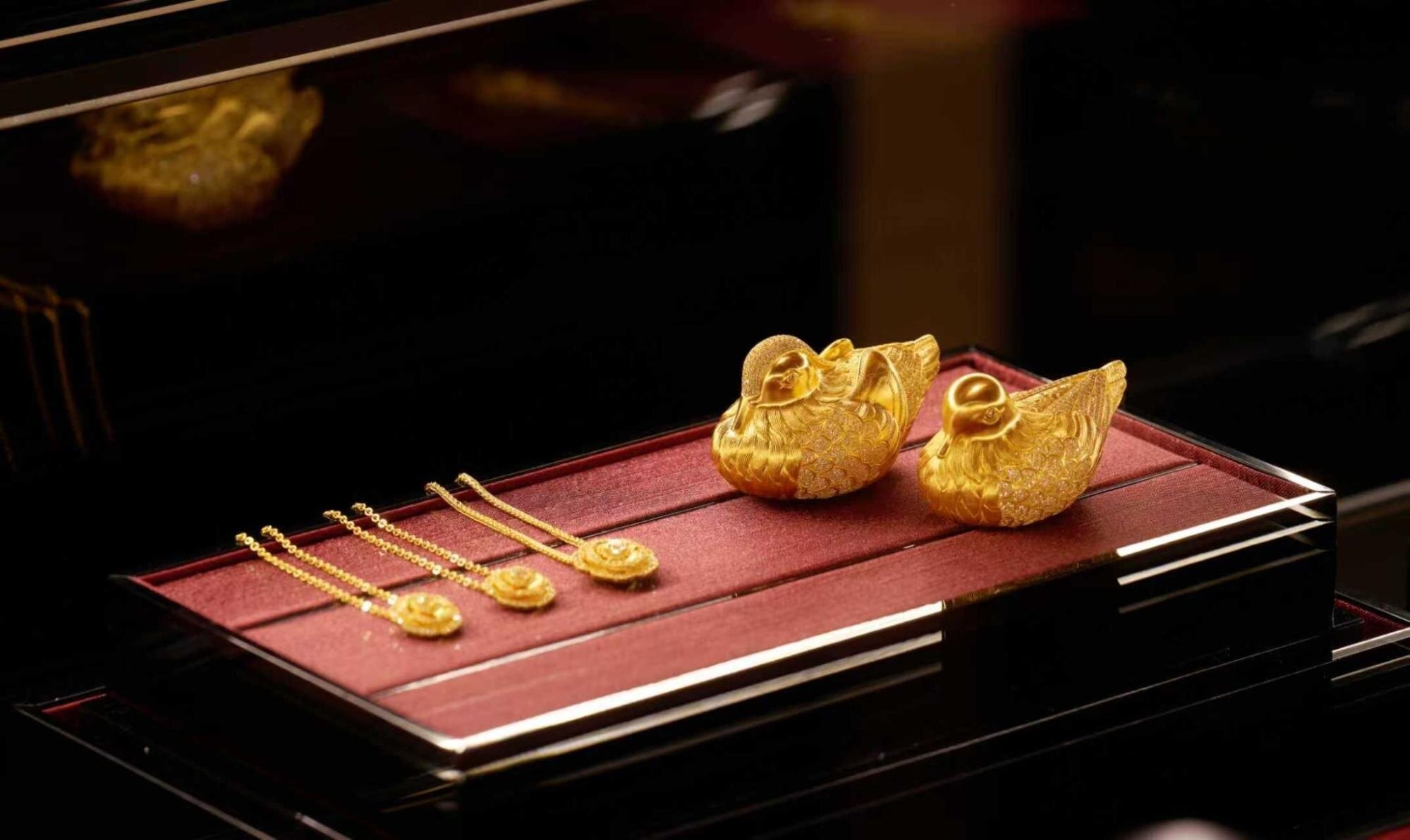
In gufa gold jewelry, the challenge is not manufacturing scale — it is design and craftsmanship innovation.
Laopu Gold maintains unusually high standards for its design organization. Designers are expected not only to possess strong technical skills, but also a deep understanding of traditional Chinese aesthetics and cultural references. Founder Xu Gaoming remains deeply involved in product development, with an unusually high level of attention devoted to product refinement and design quality. Products that fail to meet internal standards are frequently discontinued rather than commercialized.
The company continuously updates and refines its collections, but always within a clear framework: products must align with the positioning of a high-end brand; designs must respect the material qualities of pure gold itself; and collections must remain grounded in enduring elements of Chinese cultural tradition.
This consistency has allowed Laopu Gold to build a product identity that feels coherent, recognizable, and difficult to replicate.
Design Capability Is the Competitive Barrier
In gufa gold jewelry, the challenge is not manufacturing scale — it is design and craftsmanship innovation.
Laopu Gold maintains unusually high standards for its design organization. Designers are expected not only to possess strong technical skills, but also a deep understanding of traditional Chinese aesthetics and cultural references. Founder Xu Gaoming remains deeply involved in product development, with an unusually high level of attention devoted to product refinement and design quality. Products that fail to meet internal standards are frequently discontinued rather than commercialized.
The company continuously updates and refines its collections, but always within a clear framework: products must align with the positioning of a high-end brand; designs must respect the material qualities of pure gold itself; and collections must remain grounded in enduring elements of Chinese cultural tradition.
This consistency has allowed Laopu Gold to build a product identity that feels coherent, recognizable, and difficult to replicate.
Craftsmanship as a Form of Product Expression
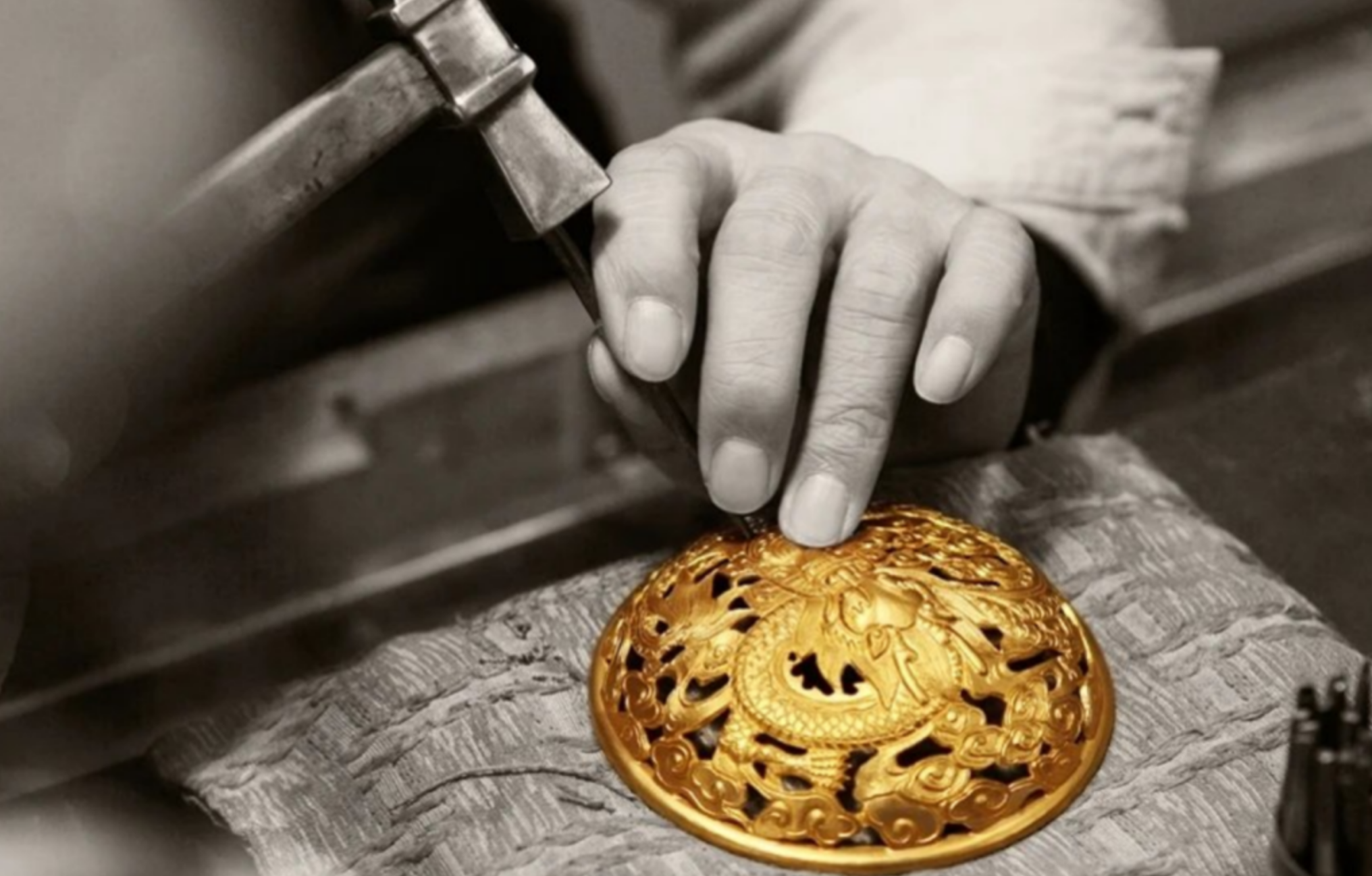
Laopu Gold’s craftsmanship heritage can be traced back to master artisans from Beijing’s historic goldsmith workshops, whose techniques originated in the imperial workshops of the Qing Dynasty.
At the same time, the company has consistently expanded the creative possibilities of traditional gold craftsmanship through technical innovation. Laopu Gold was able to scale traditional craftsmanship through modern production techniques while preserving the warmth and character of hand-crafted pieces.
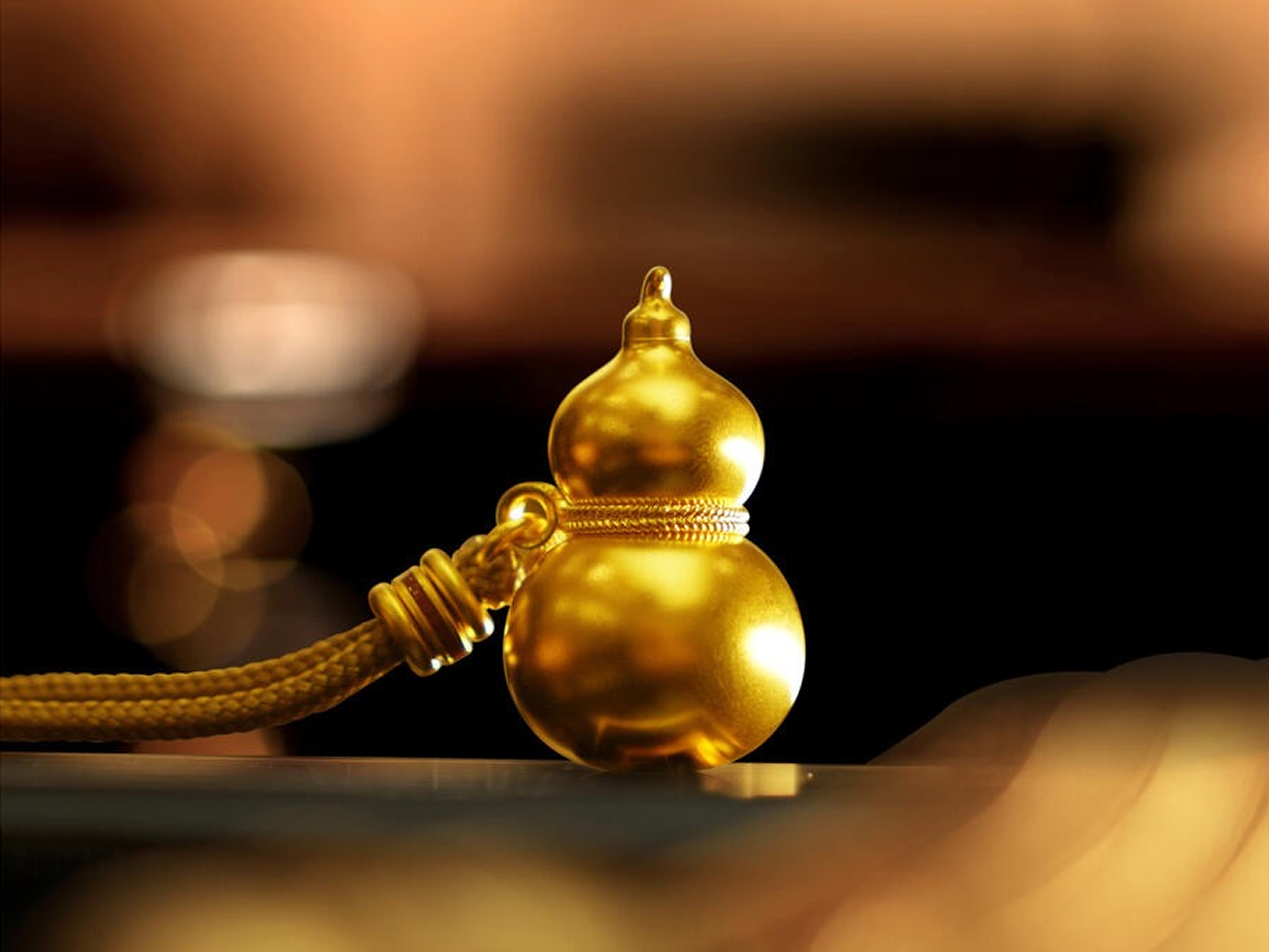
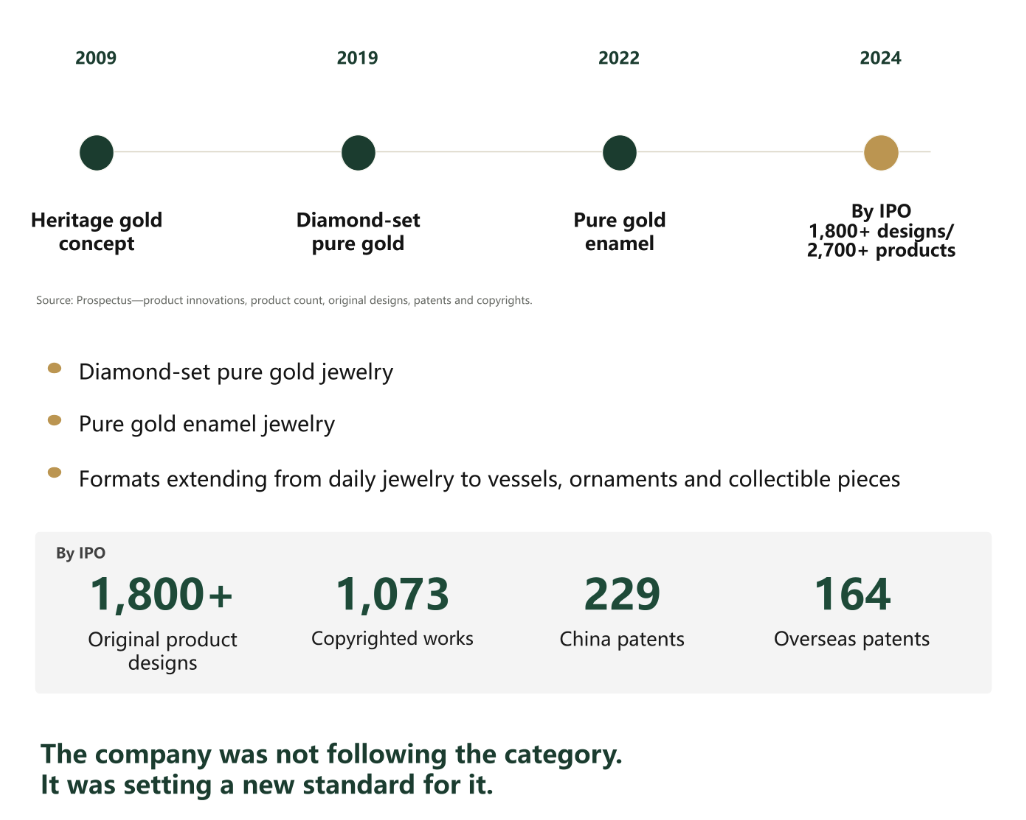
In 2019, the company introduced one of the first diamond-set pure gold collections in China, combining matte ancient gold finishes with diamonds — challenging the long-standing industry convention that diamonds should primarily be set in K-gold. In 2022, Laopu Gold launched pure gold enamel pieces, adapting traditional enamel craftsmanship to pure gold materials.
These innovations are not simply technical upgrades. They represent the company’s broader effort to continuously reinterpret traditional Chinese aesthetics through new forms of product expression.
The Organizational System Behind the Product
Laopu Gold’s product quality is ultimately supported by organizational structure and culture.
The founder dedicates substantial time to product development, while the company has built systematic training and talent development programs across both design and production functions.
The company also invests aggressively in retaining skilled artisans and designers, offering compensation meaningfully above industry norms and aligning teams through long-term participation in the company’s growth.
Over time, this sustained focus on product excellence has evolved into a core source of competitive advantage for the company.
Retail Spaces as Brand Environments
Laopu Gold’s retail stores are a key extension of its broader interpretation of Chinese aesthetics.
Historically, China’s gold jewelry industry has followed a path defined by scale-driven expansion, consolidation, and gradual movement toward premium positioning—a model fundamentally rooted in efficiency.
From the outset, however, Laopu Gold chose a different trajectory.
Rather than pursuing mass-market reach, the company focused on a more clearly defined consumer group: individuals with stronger purchasing power, a deeper affinity for Chinese culture, and a higher expectation for design and aesthetics. Around this group, Laopu Gold has built a retail experience shaped by traditional craftsmanship, cultural narratives, and spatial design — creating an environment that feels distinctly different from conventional gold jewelry retail.
This differentiation is first and most clearly reflected in its channel strategy.
Unlike most industry players that rely on franchising models, Laopu Gold operates all of its stores directly and has consistently prioritized locations within top-tier luxury shopping malls. In doing so, the company has deliberately traded faster expansion and short-term revenue scale for a more disciplined, brand-led retail footprint.
This discipline is a defining strategic choice.
Rather than optimizing for store count or speed of expansion, Laopu Gold places greater emphasis on whether each location is fully aligned with its brand positioning — and whether the physical space can accurately express its aesthetic and cultural intent to consumers.
In our early consumer research, many first encounters with Laopu Gold did not come through advertising, but through physical discovery inside shopping malls. The stores themselves acted as the entry point to the brand.
For Laopu Gold, retail space functions as more than a point of transaction. It operates as an extension of the brand’s aesthetic system. Beyond product display, the spatial environment introduces a distinct sense of cultural immersion, shaping how the brand is perceived and remembered. The store experience temporarily removes visitors from the visual noise of the mall and places them within a more contained cultural setting defined by the brand.
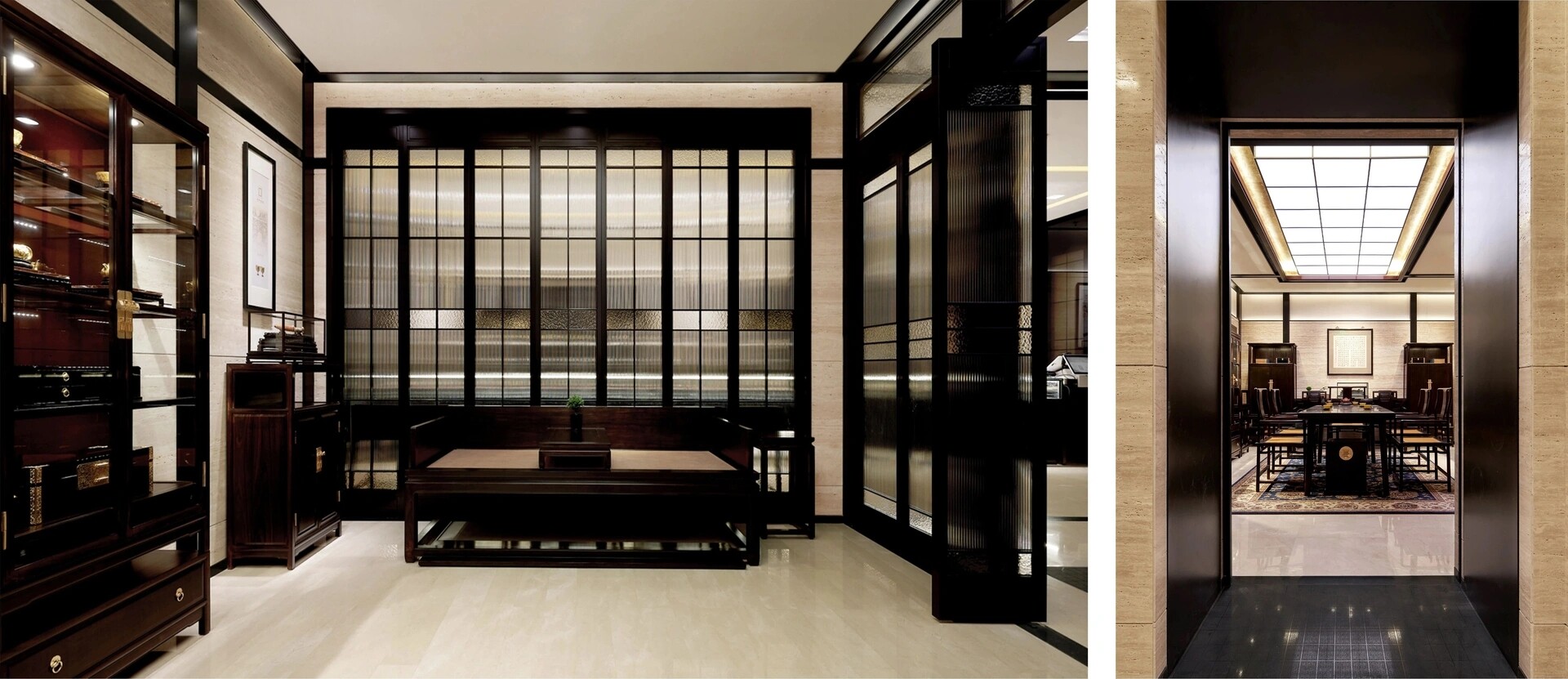
From an early stage, Laopu Gold developed an immersive retail approach rooted in the aesthetics of the traditional Chinese scholar’s study. These spaces are constructed through a restrained material language—wood, stone, carved latticework, folding screens—combined with a muted spatial rhythm that emphasizes calmness and proportion over visual intensity.
Within this framework, furnishing choices extend the same logic. Ming-style furniture, traditional lanterns, calligraphic works, and classical texts are arranged not as decoration, but as part of a coherent spatial composition that reflects a particular cultural sensibility.
Precious gold objects are integrated into this environment as spatial anchors. Individually valued at tens of thousands to hundreds of thousands of RMB, they function less as merchandise and more as physical manifestations of craftsmanship and cultural investment, reinforcing the brand’s material commitment to its own aesthetic system.
Store scale and location have also been treated as strategic variables. Larger formats allow for a more complete articulation of the product universe, while placements within top-tier luxury malls reinforce the brand’s positioning within a higher-order retail hierarchy. Over time, the store itself becomes a signal of category ambition, not just distribution presence.
However, the spatial language alone is not sufficient. The final layer of the retail system is carried through human interaction.
Store associates are required to adopt a uniform visual presentation aligned with the brand’s aesthetic codes, including traditional-style attire and understated grooming. More importantly, they are expected to develop a working understanding of the craftsmanship and cultural references embedded in the products, allowing them to communicate beyond transactional sales behavior.
The company supports this through above-market compensation and structured training, with the expectation that staff operate less as sales personnel and more as interpreters of the brand’s material and cultural language.
This approach creates a service rhythm that is deliberately unhurried — controlled, measured, and non-aggressive in tone. The interaction mirrors the broader aesthetic system of the brand: restraint as a form of sophistication.
In recent years, Laopu Gold stores in core retail locations have consistently generated exceptional traffic density and sales productivity. This performance has, in turn, enabled continued access to higher-quality locations and larger store formats, reinforcing a self-reinforcing loop between brand visibility, retail strength, and commercial outcomes.
The Rise of an Aesthetic Economy in China
Based on early consumer fieldwork conducted by BA Capital, a consistent pattern emerges in Laopu Gold’s consumer behavior: purchases are primarily driven by self-wear rather than traditional usage contexts such as preservation of value or wedding-related demand.
Within this self-use framework, consumers do not evaluate products primarily through gold weight or material input. Instead, purchase decisions are shaped by the perceived aesthetic and experiential value embedded in the object — including design quality, craftsmanship complexity, and the cultural meaning carried through form.
Across platforms such as Rednote and Taobao, “art-like” is a recurring description. Some consumers also build ongoing collections across multiple series, treating Laopu Gold pieces not as isolated items, but as parts of a coherent personal aesthetic system.
This indicates not a displacement of material value, but a reconfiguration of what constitutes value itself: gold—more precisely, gufa gold—operates simultaneously as a material object of consumption and as a carrier of design language, craftsmanship, and cultural meaning. These dimensions are not separated in consumer perception, but experienced as a unified object.
In consumer discourse, alongside descriptors such as “beautiful” and “refined,” the notion of “meaning” appears repeatedly. Importantly, this meaning is not abstract or externally imposed; it is embedded in a shared visual and cultural vocabulary.
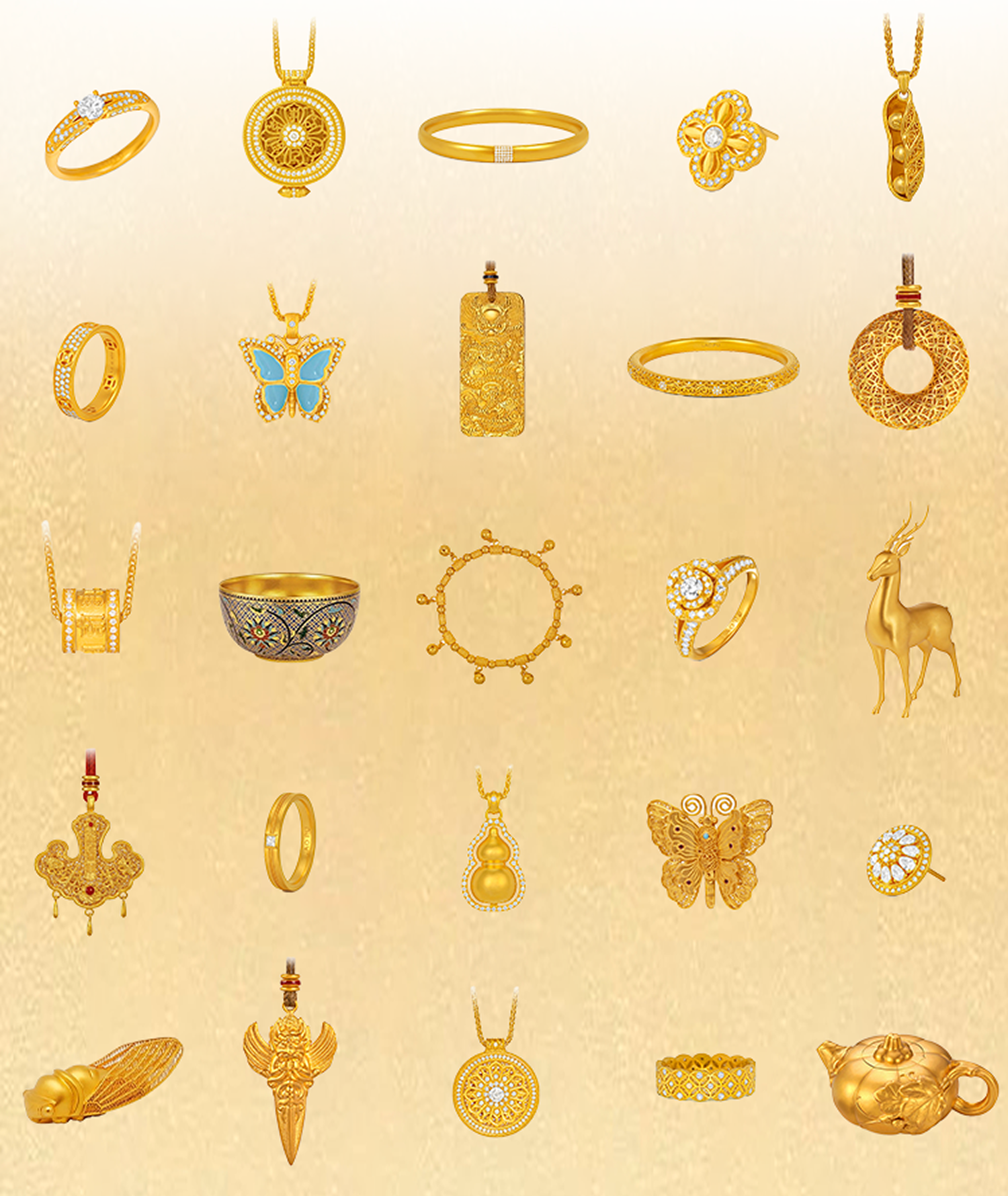
Design motifs such as Buddhist vajras, folkloric butterflies, mythological dragons and phoenixes, as well as symbols like longevity locks and auspicious inscriptions, do not function as literal reproductions of tradition. Rather, they operate as condensed cultural forms through which ideas of harmony, continuity, and idealized life conditions are visually structured.
What distinguishes Laopu Gold is therefore not the preservation of tradition as content, but the reactivation of cultural symbols through contemporary design systems—allowing historical aesthetic references to re-enter present-day perception as usable visual language.
The Emergence of an Aesthetic Generation
A structural shift in consumption underpins this pattern. A generation of Chinese consumers, shaped by relative material abundance, is placing increasing emphasis on aesthetics as a core dimension of value.
This cohort is not only more capable of recognizing design quality, but also more willing to assign monetary value to aesthetic differentiation when it carries cultural or emotional significance.
According to Laopu Gold’s prospectus, per capita disposable income reached RMB 80,999 in China’s tier-one cities in 2023, and RMB 55,921 in new tier-one cities. More importantly, this income expansion has enabled a shift in consumption logic—from function-optimized decision-making toward preference- and expression-driven consumption.
For this generation, products increasingly function as carriers of taste, identity, and cultural alignment, rather than purely utilitarian objects.
Tradition Re-entering Contemporary Consumption
At the same time, the relationship between younger Chinese consumers and traditional culture has shifted from distant recognition to active identification.
The commercial success of Palace Museum cultural products, the expansion of hanfu culture, and the revival of tea culture all reflect a broader reintegration of Chinese aesthetics into contemporary consumption systems.
Within categories historically dominated by standardized industrial production, there is a renewed attention to craftsmanship, materiality, and production processes that preserve visible human intervention.
This shift is supported by both supply-side diversification and rising cultural confidence among Chinese consumers. As a result, international brands no longer hold automatic perceptual advantage; value is increasingly constructed through product experience and aesthetic coherence, rather than origin alone.
In consumer interviews conducted by BA Capital, many respondents described their purchase of Laopu Gold as “better value.” Crucially, this “value” is not limited to gold content, but refers to a composite perception that includes craftsmanship, design language, cultural resonance, and ownership experience.
Here, “value” is not reducible to price efficiency; it is defined through the alignment between material, meaning, and personal aesthetic preference.
Digital Media and the Decentralization of Brand Formation
Historically, the construction of high-end brands required concentrated control over capital-intensive channels and media ecosystems—flagship retail locations in prime luxury districts, access to fashion media gatekeeping, and curated celebrity associations.
This structure has been gradually reshaped by the decentralization of digital media.
Content platforms now enable aesthetic products to scale through distributed consumer participation, where brand meaning is formed through repetition, interpretation, and social validation rather than centralized communication.
In particular, lifestyle platforms such as Rednote have extended brand presence beyond physical retail environments into continuous online visibility.
This dynamic is particularly relevant for Laopu Gold.
Between November 2023 and June 2024, content related to “gufa gold” on Rednote increased by more than one million posts. As one of the earliest brands to systemically define the category, Laopu Gold is frequently described by consumers as the “Hermès of gold jewelry.”
Importantly, this visibility is not primarily driven by paid communication, but by consumer-generated content that reflects aesthetic recognition and personal interpretation.
In this sense, the brand’s momentum is not constructed through controlled messaging, but through a distributed process in which consumers actively participate in defining and reinforcing its aesthetic meaning.
System-Level Capability Defines Brand Altitude
Within the world of high-end consumer brands, design capability functions less as surface styling and more as foundational infrastructure. Truly exceptional design is inherently scarce: it is built not only on aesthetic sensitivity, but also on deep cultural understanding, long-term product experience, and an almost obsessive control over detail.
More importantly, aesthetics in this context is not simply visual identity. It is a form of organizational judgment—the ability to maintain coherence across product, craftsmanship, retail space, service, and brand expression over long periods of time.
This is where Laopu Gold’s competitive foundation gradually emerges.
Its advantage does not rely on a single iconic product, a temporary trend, or an isolated craft technique. Instead, the company has spent years constructing an integrated system in which design, craftsmanship, spatial experience, service standards, and cultural narrative continuously reinforce one another.
This type of coherence is characteristic of nearly all enduring high-end brands. What consumers ultimately experience is rarely an individual product in isolation, but a complete and internally consistent brand world.
The defining characteristic of such systems is that they require time.
Individual elements can be imitated. A craft technique can be replicated; a visual motif can be referenced; a store format can be adapted. But the long-term accumulation of organizational judgment—the ability to sustain consistency across every layer of expression—is significantly harder to reproduce.
Over time, this accumulated coherence compounds into cognitive advantage, strengthening consumer recognition and deepening brand distinction.
In this sense, Laopu Gold matters not only because it is a successful gold jewelry company, but because it represents one of the earliest examples of a Chinese consumer brand beginning to build a system-level luxury capability historically dominated by international houses.
What ultimately matters in luxury is not simply the product itself, but the ability to construct enduring meaning around the product.
Gold has functioned as a store of value, a symbol of authority, and a material expression of status across civilizations for thousands of years. In China, gold objects gradually became embedded within imperial, ceremonial, and cultural systems beginning in the Tang dynasty.
Today, however, the logic of gold consumption is changing.
As social structures, consumer priorities, and cultural identity continue to evolve, gold is increasingly purchased not only for preservation of value, but also for self-expression, aesthetic enjoyment, and emotional resonance. According to research from the World Gold Council, self-wear has already become the dominant usage scenario in gold jewelry consumption, exceeding traditional wedding-related demand.
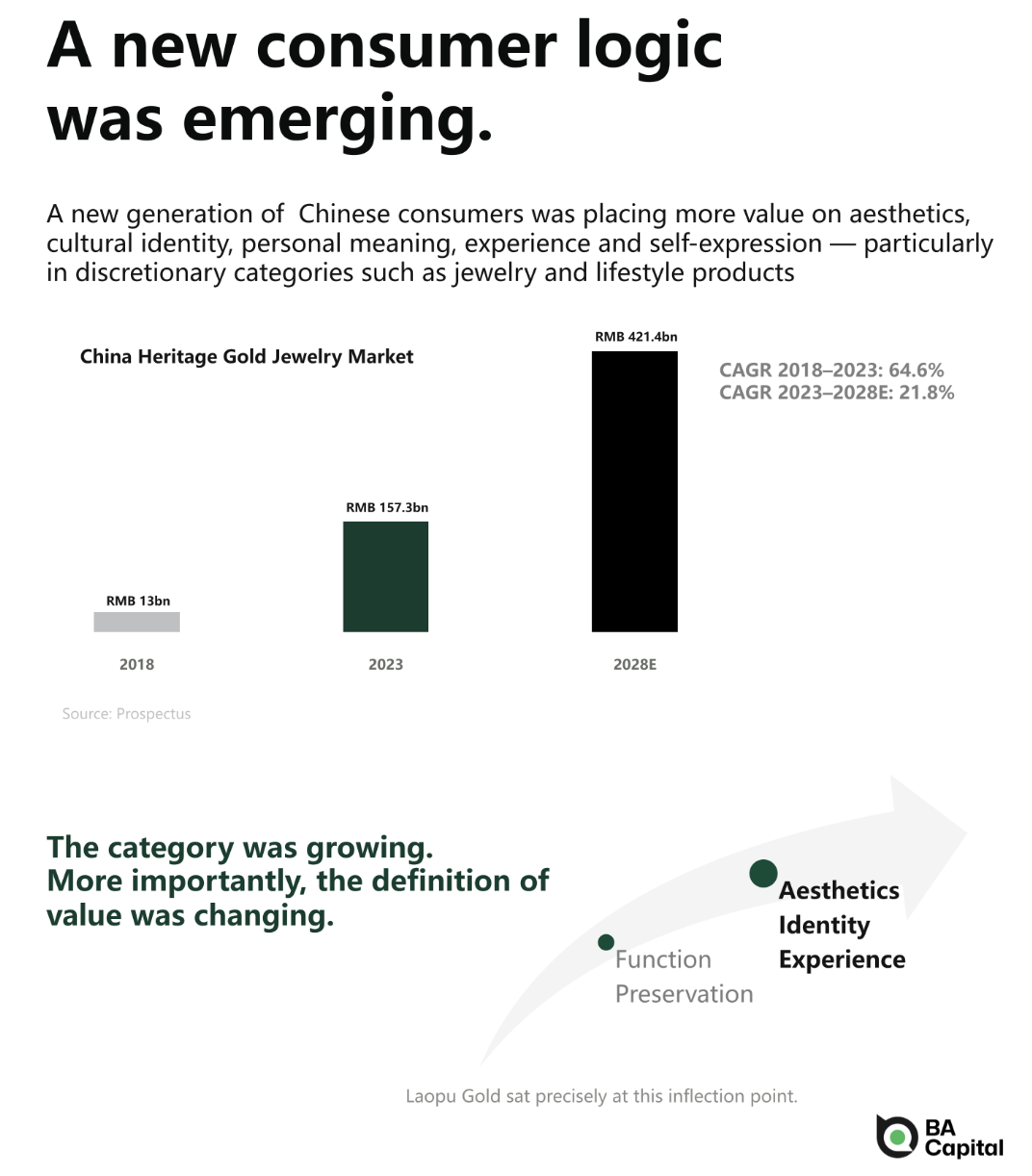
This shift has important implications for competitive advantage within the category itself. As gold consumption moves from material ownership toward aesthetic and emotional expression, value creation increasingly migrates away from raw material alone and toward the systems capable of shaping meaning, experience, and cultural relevance around the product.
This is precisely where system-level capability becomes decisive.
In categories where material inputs are relatively transparent and craft techniques can eventually diffuse, long-term differentiation is more likely to emerge from the ability to sustain coherence across design language, product development, retail experience, service culture, and brand narrative over time.
The significance of Laopu Gold therefore lies not simply in the revival of gufa gold craftsmanship, but in the gradual emergence of a distinctly Chinese high-end brand system—one built through the long-term alignment of product, aesthetics, culture, and organizational capability.