
Editor’s Note:
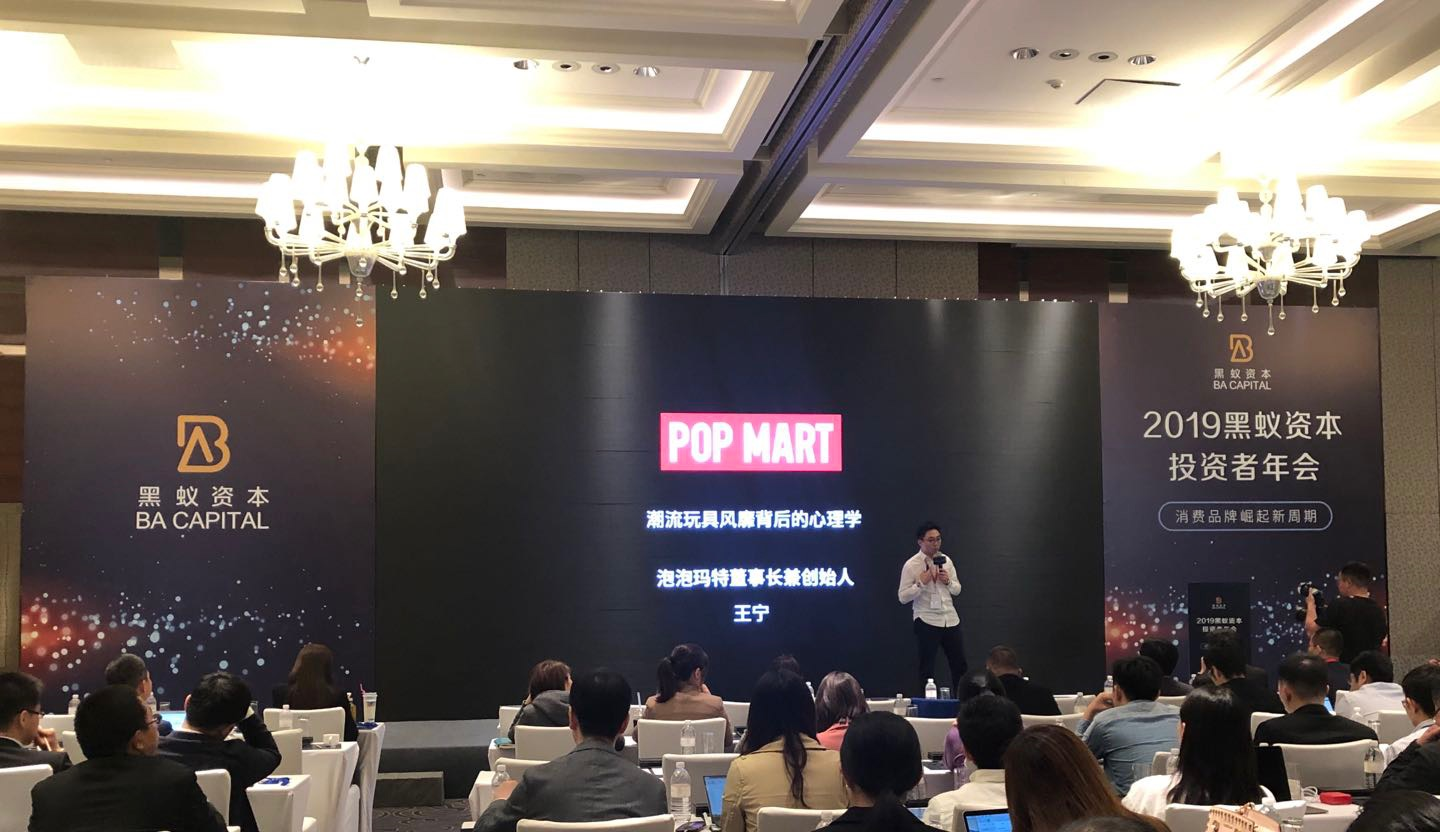
In May 2019, at BA Capital’s annual meeting, we invited Wang Ning, founder and CEO of POP MART, to share his thoughts.
In recent years, POP MART has become widely recognized among Gen Z consumers through characters such as Labubu, Crybaby, and Twinkle Twinkle.
Yet the company’s story stretches back much further.
It was one of his rare in-depth public reflections from the company’s early years, offering a valuable look into how he understood shifts in consumer culture, the company’s future, and the psychology behind the rise of art toys.
This retrospective revisits four questions that remain central to understand POP MART’s early trajectory:
- What was POP MART’s business model?
- Why did Molly become a phenomenon?
- How can an IP emerge without content, and what elements drive its formation?
- How did Wang Ning’s thinking evolve over time?
“People have only started hearing more about us in the past two years.”
Now, our name, POP MART, is familiar and easy to say.
Over the past two years, we’ve received much more attention, and some people may even see us as a new company. Last year (in 2018), we were named one of China’s “Top Ten New Retail Species.” But in fact, POP MART has already been in business for 9 years.
I started in retail on May 13, 2008. I painted the walls myself and opened my first physical store. By this weekend, that will be exactly 11 years ago. So we are literally veteran entrepreneurs. POP MART has existed as a brand for 9 years. It’s just that more people have heard about us over the past couple of years.
Today, I want to speak about the psychology behind the rise of art toys. But before that, let me briefly explain what kind of business we are actually building.
POP MART was never just a retailer
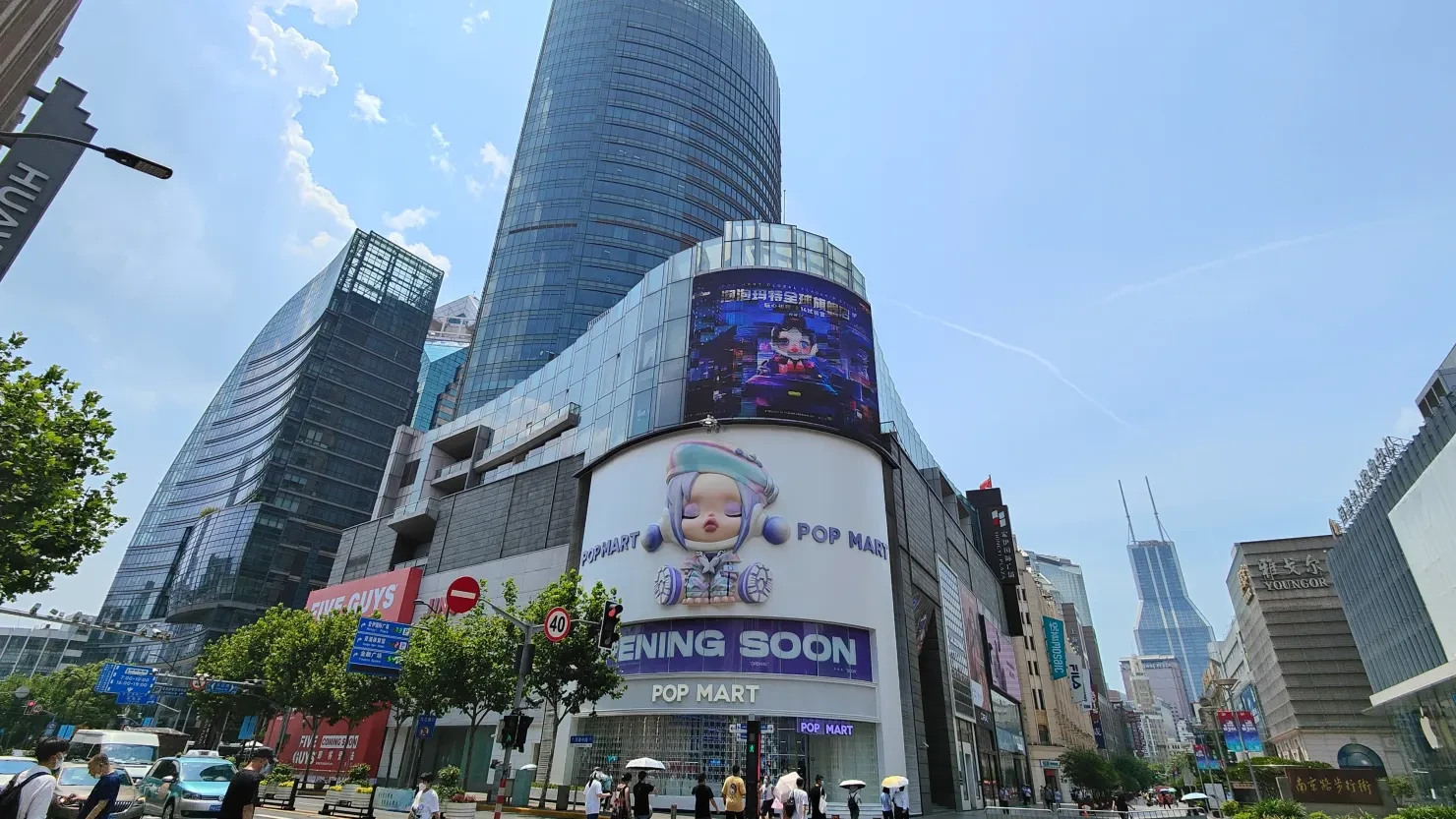
Most people know us for our stores, found in many of China’s first- and second-tier cities. Based on this, many think we are a retail company, and some assume we are in the toy business.
In reality, our operations go well beyond the storefront. Our business consists of:
- Retail
- Artist representation
- Interactive entertainment
- Licensed merchandise development
- Art toy exhibitions
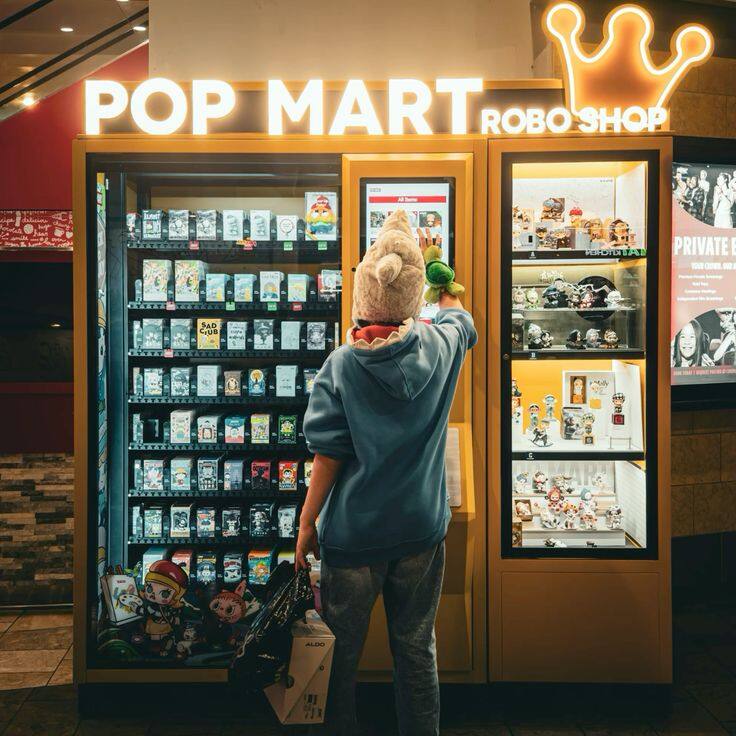
Since all of our stores are directly operated, we’ve kept the footprint relatively disciplined. At the time, we had around 100 stores. We expected to reach roughly 120 to 130 stores by the end of the year. In addition, we had more than 300 automated vending locations and expected that number to reach around 600 by year-end, alongside some unmanned retail formats.
By mid-2019, POP MART was also already expanding internationally. Our products were available in more than a dozen countries and regions, and we expected that number to approach 30 by the end of 2019. Later, I will explain why, despite being an entrepreneurial company, we moved relatively quickly in global expansion.
Online, we were still something of a newcomer on Tmall as of 2019. At that time, Tmall classified us under the “model toys” category. In 2018, we ranked first in that category, ahead of companies such as Disney and Bandai. Our growth was so rapid that Tmall had begun discussing whether to rename the entire category from “model toys” to “art toys.”
Why “art toys,” not simply “toys”?
Many people still think of toys as something for children. But most of our customers are actually 15 or older. That is why we call this category art toys: they are collectible items intended for display and appreciation, not just playthings.
We even influenced how Baidu Baike defined the category at the time. We wanted people to understand that art toys weren’t traditional toys, but collectibles centered around artistic expression.
China’s manufacturing and market scale gave POP MART a global advantage
Artist representation is another important pillar of our business. It is also one of the reasons we were able to expand internationally relatively early.
Over the past 40 years of reform and opening up, China has accumulated two “key advantages,” so to speak: Manufacturing in China and the Market in China.
So how do we use them?
To discover and develop artists from around the world.
Many of the artists we worked with were international. Around that time, for example, we had just signed a female artist from Slovenia whom I thought was incredibly talented. What China offered was a highly developed manufacturing ecosystem. Once an artist had an idea, we could turn it into a product very quickly through China’s supply chain and factory network.
When you travel around Europe, you notice that many products are still handmade. One reason is that the manufacturing ecosystem there is very different from China’s. Even if a designer wants to mass produce something and finds a factory to work with, the economics are often difficult. Local markets are relatively small, so meeting minimum order quantities can be risky. If they produce 10,000 units, it may take years just to sell through the inventory.
Exhibitions as Part of the Ecosystem
Another part of our business is the annual art toy exhibition.
Although we had never organized exhibitions before, within three years and four editions, our art toy exhibition had become the largest and most professional of its kind in Asia.
What made this possible was a different operating model.
This came from our years of experience in retail. Most exhibitions follow a relatively simple model: rent a venue, divide it into booths, and lease those booths to participants. We took a more integrated approach. POP MART managed checkout, operations, and procurement centrally, which allowed us to control the overall experience from end to end.
Looking back, I believe this was one of the most important things we did during those years.
On the surface, the exhibition looked like a lively consumer-facing event. But for us, its B2B value was even greater. It helped POP MART establish itself within the artist community. At every exhibition, new artists and new IP would emerge and become part of our platform.
The Moment POP MART Saw the Category Breaking Through
In 2018, we organized an exhibition at Xidan Joy City in Beijing for one of our signed artists. The artist was a Canadian designer who had created a character called Pucky.
The exhibition became so popular that I did not even make it to the venue myself.
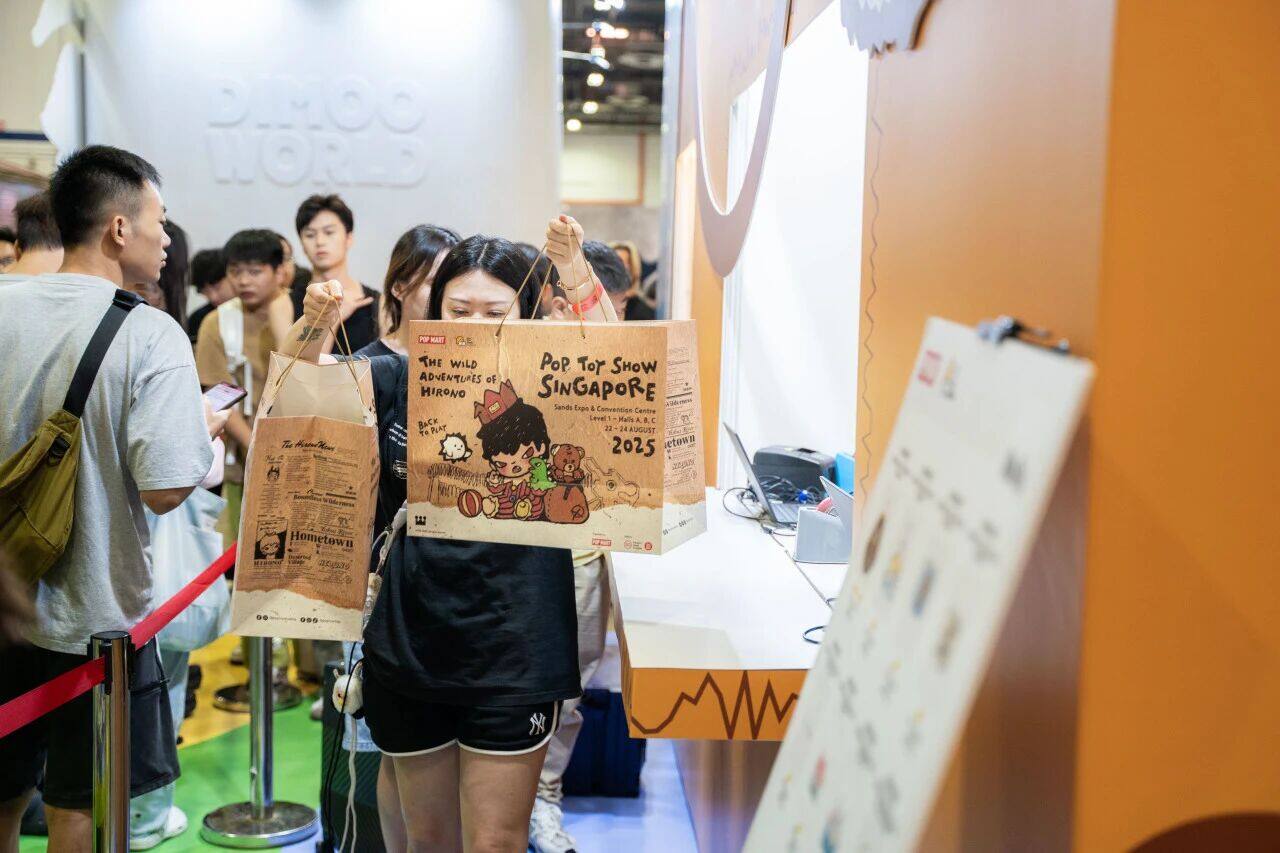
On December 21, around Christmas, Beijing was freezing. But at 6 a.m., 2,000 people were already lined up outside Xidan Joy City, waiting to buy a new product.
For us, that was an encouraging signal.
The last time Beijing had seen that many people lining up outside a mall in such cold weather for a product launch was probably during the iPhone 4 release in 2012. For a Chinese brand , drawing 2,000 people in the middle of winter for a product launch was extremely rare.
More importantly, as everyone could see, the people lining up for purchases and signings were adults, not children.
The same thing happened in Shanghai. We held an exhibition on April 5, but by April 1, four days before the event, people had already started lining up. They camped outside for four days and four nights, eventually occupying an entire street.
That had never happened before for an exhibition in Shanghai.
To better manage demand, we later arranged online reservations and allowed around 600 to 1,000 visitors to enter early. Even then, they still had to arrive at the venue by 6 a.m.
Blind Boxes Become a New Generation’s Version of Stamp Collecting
When we first started making blind boxes, we imagined that one day they might become for younger generations what stamps once were for earlier ones.
At the time, we believed that collecting behavior, as well as the demand for art and collectibles, would change significantly. Looking back, I think that intuition has largely been validated.
Today, beyond our own artists, nearly all of the leading IP owners — whether Disney, Hello Kitty, Minions, Sesame Street, Pokémon, or others — have worked with us to design and distribute their blind box products in China.
We also developed many licensing partnerships. We are very selective about the IPs we work with. In most cases, we only collaborate with leading brands in their respective categories.
Together, these different parts of the business formed a complete ecosystem and turned POP MART into a platform company.
From LOFT to Bandai, LEGO, and Disney
To sum up, many people ask what POP MART ultimately wants to become.
In the beginning, when we chose the name POP MART, we wanted to build something similar to Japan’s LOFT — a retailer for popular and trendy lifestyle products. That is why we called it POP MART: a market for popular products.
Later, we discovered that the art toy category was growing very quickly, so we began to narrow our focus. Step by step, we moved away from broader lifestyle retail and concentrated entirely on art toys.
To outsiders, it may have seemed as if we were constantly changing. But throughout all those years, our fascination with two things never changed: design and business.
A few years ago, our first goal was to become a company like Bandai. Today, I believe we’ve built many of those same capabilities. We can work with IP creators, develop products, and bring them to market effectively.
At this stage, however, we hope to become more like LEGO.
What makes LEGO remarkable is that it does not simply sell toys. In my view, it is almost like a technology company. It created a system. It created a language. Every IP that works with LEGO has to be reinterpreted through LEGO’s language. That is where its greatest value lies.
For us, many of the things we are doing are also about building our own system and our own language.
We are already moving in that direction. We now have standardized product formats, sizes, and a recognizable design language. Our fans have also developed strong loyalty, along with their own community behaviors—shaking boxes, buying full cases, hunting for secret figures, and more.
But we are also different from LEGO.
After decades of development, LEGO has built one powerful language. We hope to build not only a language, but also a portfolio of different IPs.
For POP MART’s future—what we see as 3.0—perhaps in five years, or maybe ten, we hope to become the Chinese company that most resembles Disney. Like Disney, we hope to own many high-quality IPs and use them to create commercial value in different ways.
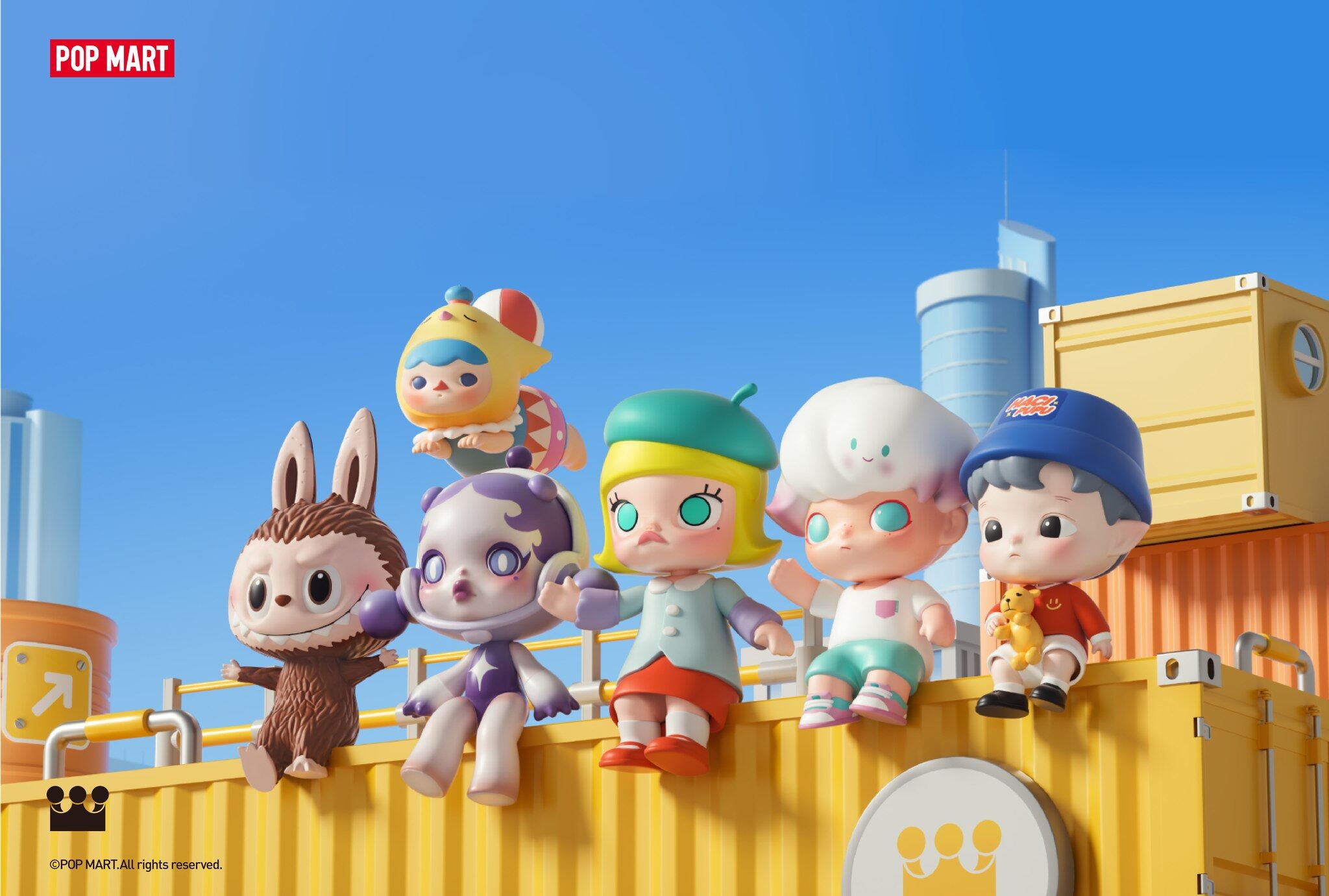
Of course, we may not make as many films as Disney. But we do hope to own many highly valuable IP assets.
A New Era of Artistic Demand and Supply
Here comes to the main point I want to share today.
To be candid, many people did not understand what had happened. Why did Molly become so popular? Why were so many people willing to line up, even camp outside for four days and four nights, to buy these products?
To me, the rise of art toys reflects a broader shift: both the demand for art and the ways art is created, produced, and distributed have changed significantly.
There is a well-known Japanese figure company called Kaiyodo, which has been making figurines for more than 60 years. Its second-generation leader, now in his sixties, has reached out to me quite frequently over the past two years.
What puzzled him was this: for decades, Kaiyodo had focused on one thing—turning anime characters into figurines and selling them to fans. Yet that business had become increasingly difficult.
He once asked me a very serious question:
“You have no underlying content. There’s no story. Why are people so obsessed with it? What is the business logic behind it? What is the psychology?”
Kaiyodo also organizes Wonder Festival, the world’s largest figure exhibition. He told me that in its 35-year history, no foreign company had ever participated—it had always been a distinctly Japanese event.
Then he said to me, “I want to invite you to participate next year. Take as much space as you want. You’ll become the first foreign brand to exhibit at Wonder Festival in Japan.”
I asked him why.
He said he wanted to attract younger consumers. His biggest concern was that the average age of Kaiyodo’s customers had already reached around 40. And if you attend Wonder Festival today, you can clearly feel that the audience is indeed getting older.
So why are younger consumers in both Japan and China increasingly drawn to characters like Molly, while becoming less attached to traditional anime-based figures?
In my view, the answer comes down to three keywords: time, values, and satisfaction.
Time
The first keyword is time.
When we talk about IP, what comes to mind as a “super IP”?
For me, examples include Journey to the West, My Fair Princess, Jay Chou, and Stephen Chow. These are the major IPs in our collective memory. A few years ago, almost any major film tied to Journey to the West could become a box-office success.
But have we ever thought about why these became major IPs? Was it simply because the content was good?
I believe the most important factor was time.
Some people spent countless summer vacations rewatching Journey to the West. They memorized the characters and storylines through repetition, and over time, that familiarity gradually turned into genuine attachment.
Others watched My Fair Princess over and over again, or spent countless nights listening to Jay Chou. They formed emotional connections through the time they invested.
Today, however, young people experience media very differently. Their attention is far more fragmented than it was in the past.
We noticed a very clear shift.
Ten or fifteen years ago, when truly nationwide hits like My Fair Princess or Water Margin aired, almost everyone watched them.
Five years ago, when My Love from the Star became a cultural phenomenon, maybe 60% of people were following it.
By the year before this talk, even a hugely popular series like Story of Yanxi Palace probably reached only 30–40% of the public.
And today, even the biggest breakout shows may capture the attention of only a small share of viewers.
I remember how popular Story of Yanxi Palace was. I wanted to understand why so many young people were obsessed with it, so I started watching it myself. But the first thing I felt was pressure: I opened the app and saw that the series had 80 episodes.
That was also when I realized platforms had introduced 1.5x and 2x playback speeds. People had started consuming dramas in a completely different way.
What made it even more overwhelming was that just as I got through 30 or 40 episodes and began to feel the show was genuinely excellent, another major historical drama, Ruyi’s Royal Love in the Palace, premiered—also with around 80 episodes. I had only finished half of Yanxi Palace, and eventually gave up on the rest.
Wei Yingluo, the heroine of Story of Yanxi Palace, is no less charismatic than Xiaoyanzi, the iconic female lead from My Fair Princess. The difference is that our generation had enough time for characters like Xiaoyanzi to become deeply embedded in popular culture. Today, people no longer spend that kind of time with new characters.
Is the content itself worse? I don’t think so. What has changed is the way people allocate their attention and time.
Now imagine two figurines placed in front of you.
One reason art toys resonate today is that they dramatically lower the time threshold for engagement. Within a minute, you already know whether you like something or not.
There is another important dimension as well. If time plays a central role in how IP is formed, then owning a Molly figure creates a very different kind of relationship. When someone places Molly on a desk or at home, they may see it every single day. Over time, the cumulative exposure to Molly may actually exceed the time they spend with many traditional entertainment IPs.
From that perspective, repeated interaction itself can gradually strengthen an IP in people’s minds.
In the past, many people understood IP through a Disney-like model: first create compelling content, then allow an IP to emerge from it.
That logic was never wrong. But as the media environment changes, it is no longer the only path.
Values
The second keyword is values.
In the past, people’s value systems were more likely to converge. Everyone liked both the male and female leads. Everyone disliked the Villain.
But younger consumers today think very differently. Even a character like Rong Momo — a classic “villain” figure in Chinese television — can become appealing to them. Supporting characters can develop their own fan base and emotional resonance. Values and aesthetics have become far more diverse.
Take purchase motivations as an example.
If 100 people buy Iron Man, the motivation is probably quite similar: they admire the idea of becoming a superhero.
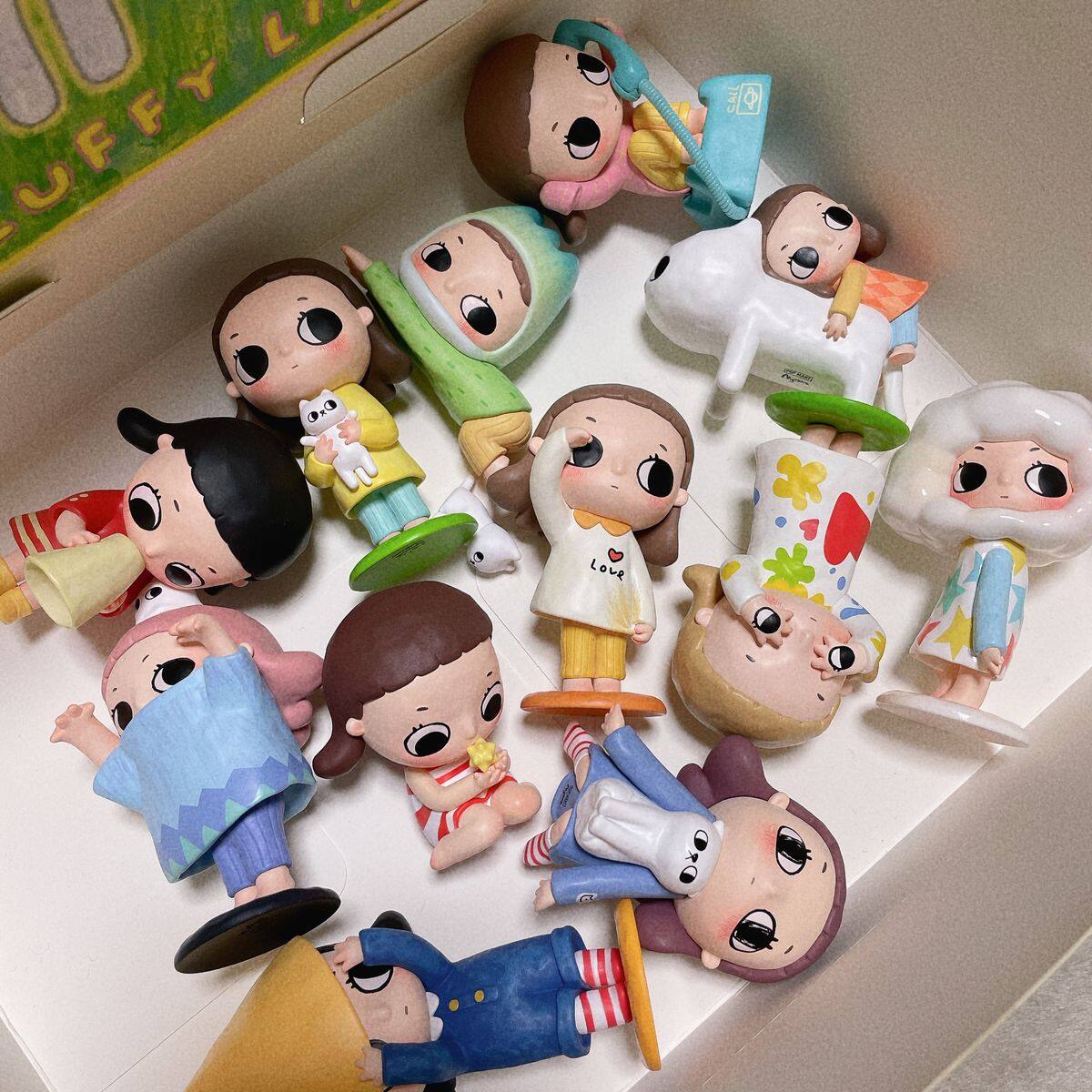
But if 100 people buy Molly, there may be 100 completely different reasons.
Some people feel she looks like them. Some simply find her cute. One of the most memorable stories I heard came from a customer last year — a man in his sixties.
We later learned more about his background. He had only one daughter, but over time their relationship had grown distant. To him, Molly resembled a four- or five-year-old child, and the happiest years of his life were when his daughter was that age. So he began collecting different versions of Molly as a way of preserving those memories.
His Molly was uniquely his own — filled with personal meaning.
Iron Man, by contrast, is largely the same character for everyone.
Why artists matter
Why do we think of these creators as artists rather than simply toy designers?
The category itself was originally called “Art Toy” or “Design Toy.” It emerged from a broader shift: artists began to realize that both the audience for art and the ways art could be created, produced, and distributed were changing dramatically.
At the same time, the mediums of artistic expression were evolving. In earlier generations, people sang folk songs; later, younger generations turned to rap. In much the same way, some artists began using toys as a new medium for creative expression.
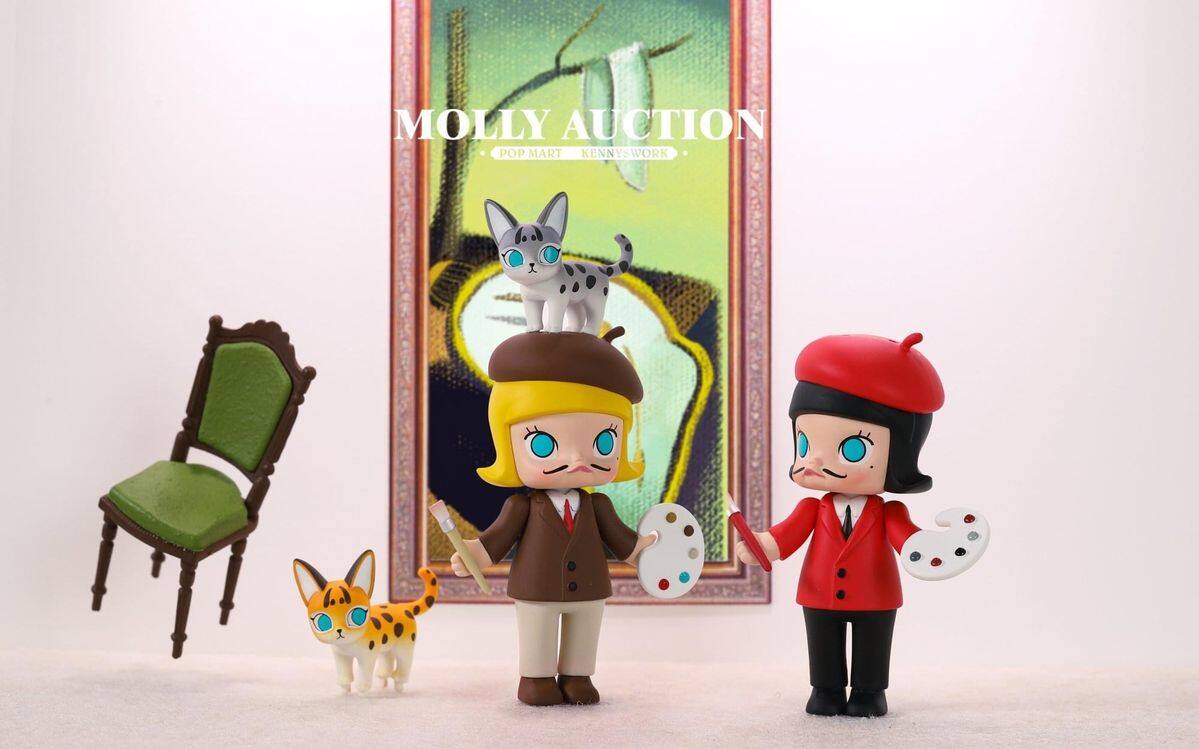
When we first developed Molly, I remember having a long conversation with the artist behind the character. I asked why Molly’s face looked so neutral and restrained. Why not make her smile slightly? Or give her a more rebellious expression? Either seemed more conventionally appealing.
But he said neither would work.
He wanted Molly to feel happy when you were happy, and melancholic when you were sad.
That is the mindset of an artist.
It is very different from simply designing something visually attractive and calling it an IP.
People with that kind of creative instinct are extremely rare. Even globally, there are only a small number of art toy creators we would truly consider artist-level talents. We were fortunate to work with many of the leading artists in the category from a very early stage.
Satisfaction
The third keyword is satisfaction.
What is the logic behind art toys?
First, we believe the appeal is closely tied to the instinct to collect. Collecting is deeply human. Regardless of age, wealth, or background, most people have some desire to own, and accumulate things they care about.
Wealthy collectors may pursue antiques. Entire generations once collected stamps. Many people, as children, collected cards hidden inside snack packages. The act of collecting itself creates a sense of satisfaction and emotional reward.
For a long time, stamps were one of the most accessible forms of mass collecting. As that cultural role gradually faded, art toys began to fill a similar space — becoming a new generation’s form of collecting culture.
Why? Because in many ways, art toys share similar characteristics with stamps.
First, they carry artistic value. Behind each figure is an artist with a distinct creative identity.
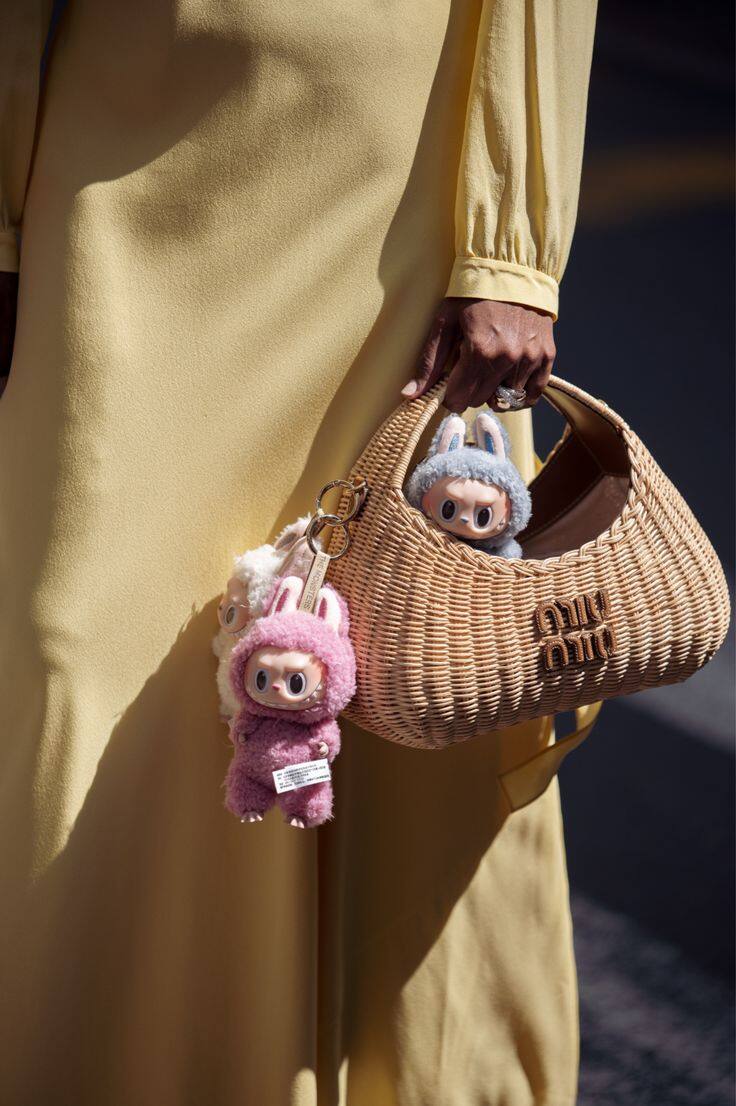
They are also highly collectible in a practical sense. Large plush toys quickly take up space, but art toys are compact. A single display cabinet can hold an entire collection.
Second, the category has developed a mature secondary market. Many editions are produced in limited quantities, and collectors can easily trade or resell pieces through our platform or other resale marketplaces.
Products with these characteristics are extremely rare in consumer markets.
First, like Moutai, they can appreciate in value after purchase.
Second, they naturally create consumer-to-consumer interaction. If you happen to get the figure I want, and I get the one you want, we can trade. That exchange creates social engagement around the product itself.
This helped the category spread through word of mouth much faster than we originally expected.
Spiritual Consumption
When it comes to satisfaction, we often ask ourselves a question: what is it that truly creates a sense of fulfillment for consumers?
Products tied to basic needs can certainly generate large markets and stable demand. But even the wealthiest consumers place natural limits on spending for necessities. Eating a meal, by itself, does not necessarily create lasting satisfaction.
But imagine eating a steak in a space capsule. The experience itself suddenly becomes emotionally meaningful.
In many ways, it is spiritual and emotional consumption that creates a deeper sense of fulfillment. And regardless of income level, people are often far more willing to spend on things that offer emotional meaning, identity, or joy.
If consumer markets continue expanding in the future, the growth may not come primarily from necessities. Spending on necessities has natural limits. Emotional and spiritual consumption, however, has much greater room to grow.
That is what I wanted to share today.
Our direction has always been the same: to inspire passion and bring joy to people. We hope to continue bringing more happiness and emotional connection into people’s lives in the years ahead.
That is what I wanted to share today.
Our direction is still to light up passion and bring joy. I hope we can bring more happiness and joy to people’s lives in the future.